Texas Rangers Usher Became a Jumbotron ‘Dancing Queen’ — Now Kids With Down Syndrome Are Watching Her Dream Come True
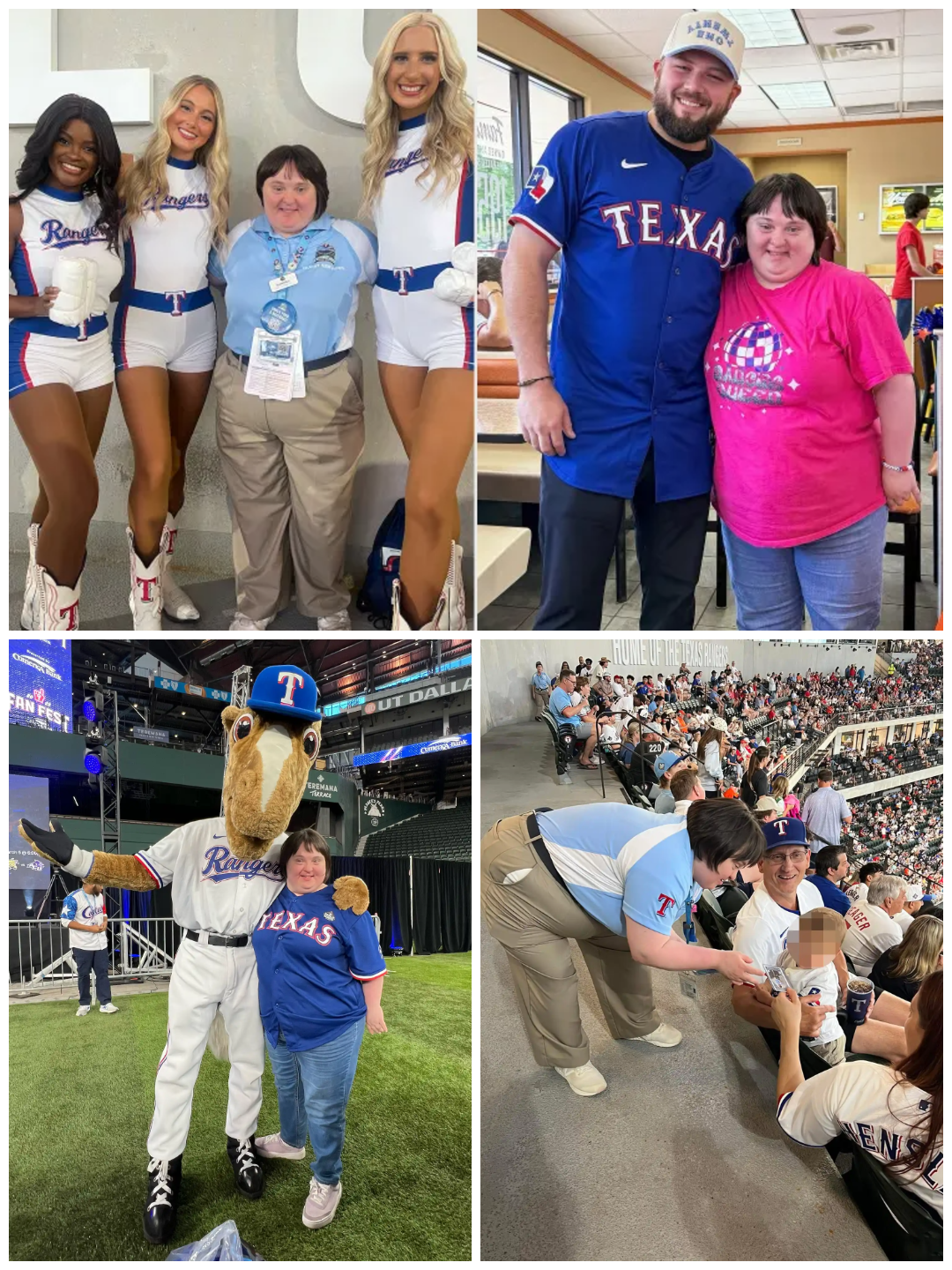
Hannah Speirs was hired by the Texas Rangers to help people find their seats.
Nobody hired her to dance.
There was no choreography written into the job description, no expectation that cameras would eventually search for her in the stands and certainly no plan for her to become a familiar face to thousands of baseball fans.
Hannah simply loved the music.
So when a song came on at Globe Life Field, she moved.
Again and again, the stadium cameras found her.
Before long, the 34-year-old usher with Down syndrome had become something of a local celebrity, earning the nickname “Dancing Queen” for the energetic performances that repeatedly landed her on the jumbotron.
She even has an unofficial trading card.
But the most important audience Hannah has found may not be the thousands of Rangers fans watching from their seats.
It is the children with Down syndrome who now see her working, dancing and enjoying the job she once announced she was determined to get.
For them, Hannah’s message is simple:
You can have dreams too.
Her Rangers Career Began After Another Job Suddenly Ended
Hannah has worked for the Rangers since 2012.
The path that brought her to the organization began unexpectedly when a tornado struck the nursing home where she had been working.
When people began asking what she would do next, Hannah apparently had little uncertainty about the answer.
She wanted to work for the Texas Rangers.
Her father, Kent Speirs, mentioned that ambition to a coworker, and the conversation eventually reached former Major League Baseball player and Rangers executive Jim Sundberg.
Sundberg wanted to meet Hannah.
Soon afterward, she had a job in guest relations as an usher.
It was a role that immediately suited someone who loves interacting with people.
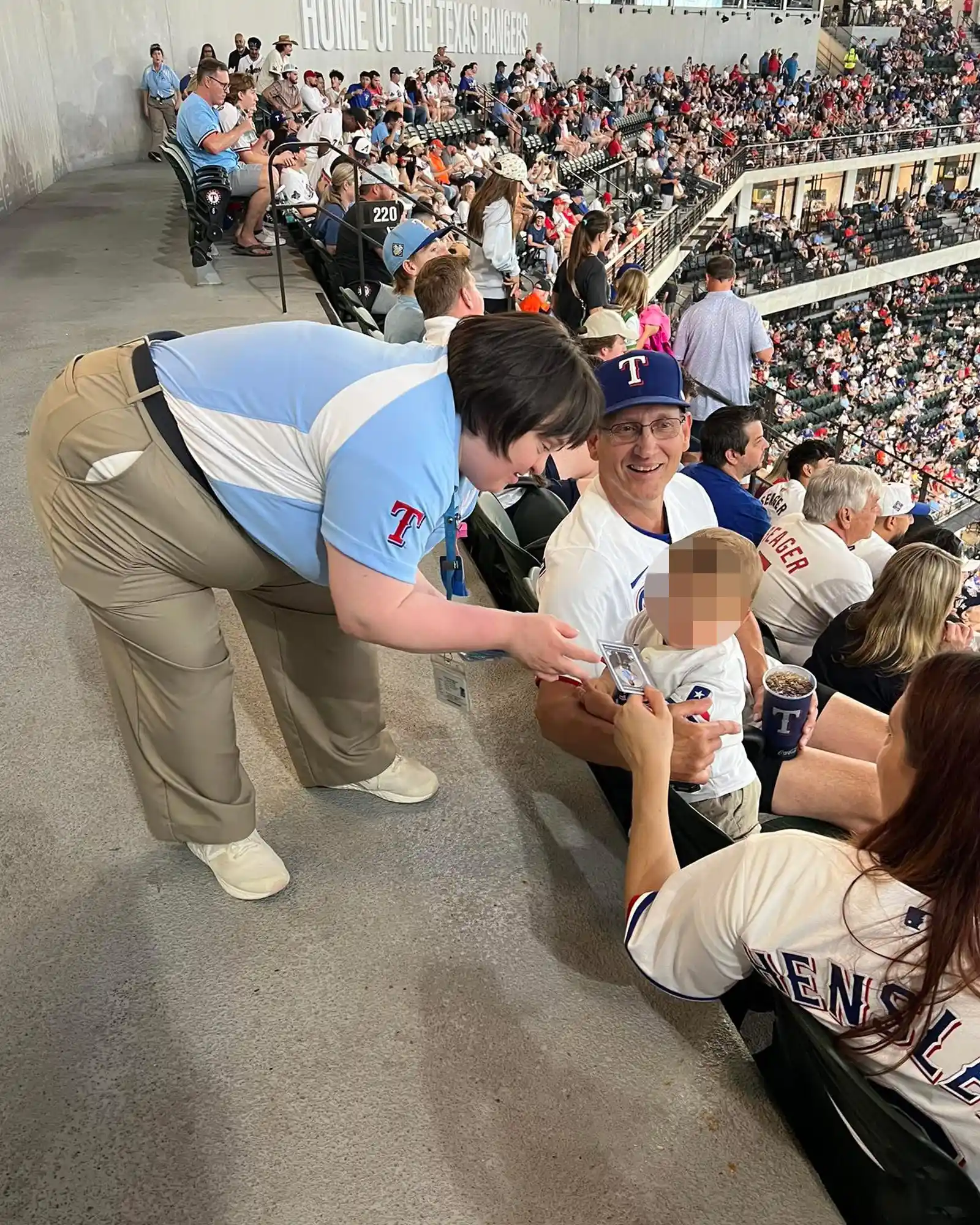
Hannah helps fans locate their seats and tries to make their visits memorable.
Then her personality added something nobody could have included in an employment contract.
She started dancing.
The Jumbotron Kept Finding Her
Hannah says she enjoys virtually every song played inside the ballpark.
One is particularly appropriate.
ABBA’s “Dancing Queen.”
She also cites the 2003 Disney Channel movie The Cheetah Girls as an influence, although her mother, Charlotte Speirs, says many of Hannah’s routines are entirely her own.
“She knows what the crowd likes,” Charlotte told PEOPLE.
That instinct turned an ordinary moment between innings into part of the experience of attending a Rangers game.
When music starts and Hannah begins moving, cameras often pick her out of the crowd.
Her image appears on the giant screen.
Fans react.
Hannah keeps going.
The performances became frequent enough for her to develop the “Dancing Queen” identity among people familiar with the stadium.
For Hannah, however, the attention is not really the goal.
She says the part she loves most is making other people happy.
Her supervisor, Lisa George, described Hannah as someone who brings joy to every shift and praised the warmth she shows toward fans.
That joy has now traveled beyond the ballpark.
Children With Down Syndrome Came to Meet Her
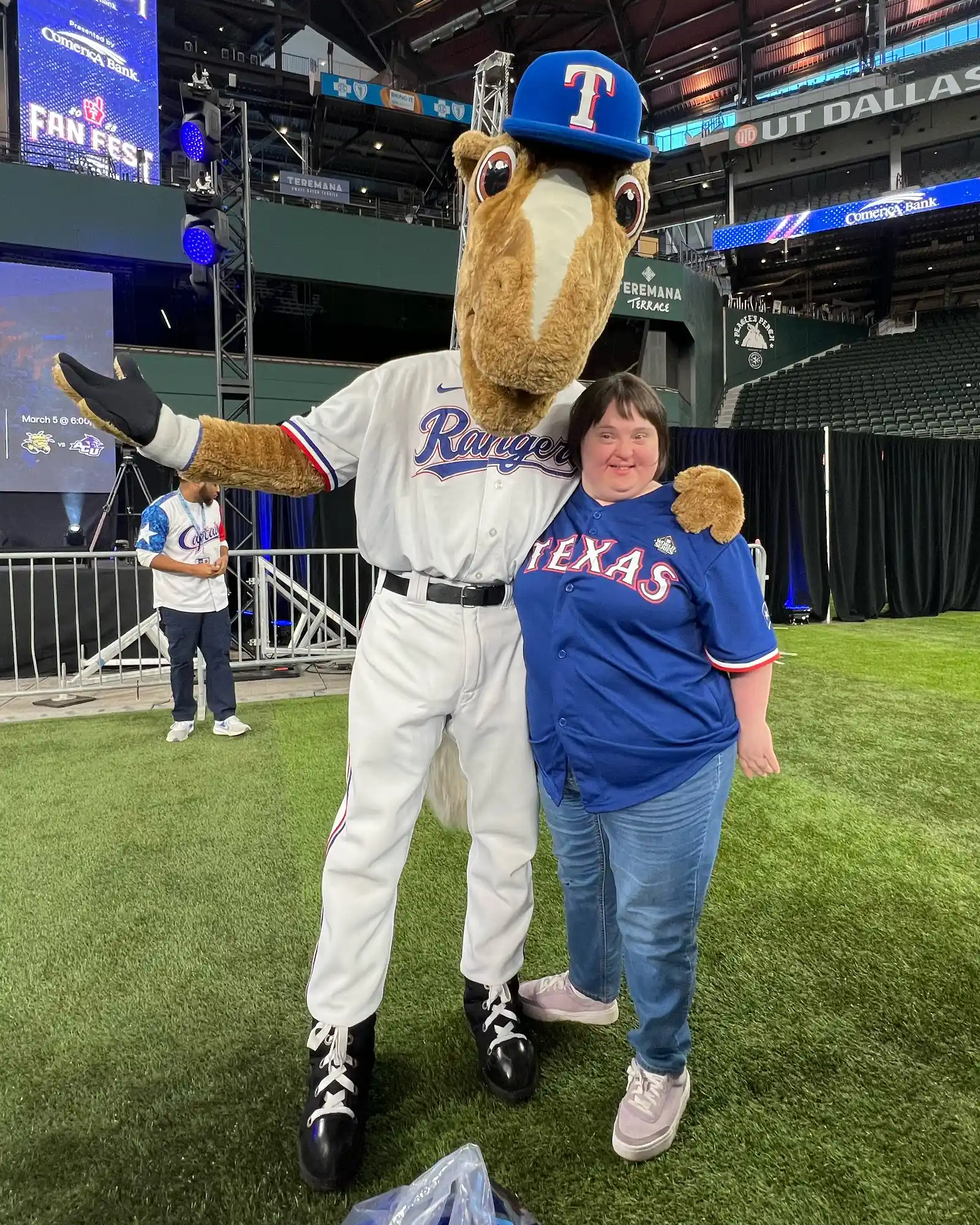
On Aug. 23, the Rangers hosted a Down syndrome Awareness Day at Globe Life Field.
For Hannah, the event transformed her from an employee fans recognized into something else entirely.
A role model.
She met children with Down syndrome and had an opportunity to encourage them directly.
Hannah described the experience as one of the incredible opportunities of her life.
Her mother saw the effect from another perspective.
Charlotte said Hannah tells children that they can live their dreams and pursue what they want to do.
The message carries extra weight because Hannah is not delivering it as an abstract motivational slogan.
The children can see her doing exactly what she dreamed of doing.
More than a decade earlier, after losing her previous workplace, Hannah declared that she was going to work for the Rangers.
Then she got the job.
She stayed.
And over the years, she became someone fans actively look forward to seeing.
One Rangers Player Has a Special Connection to Hannah
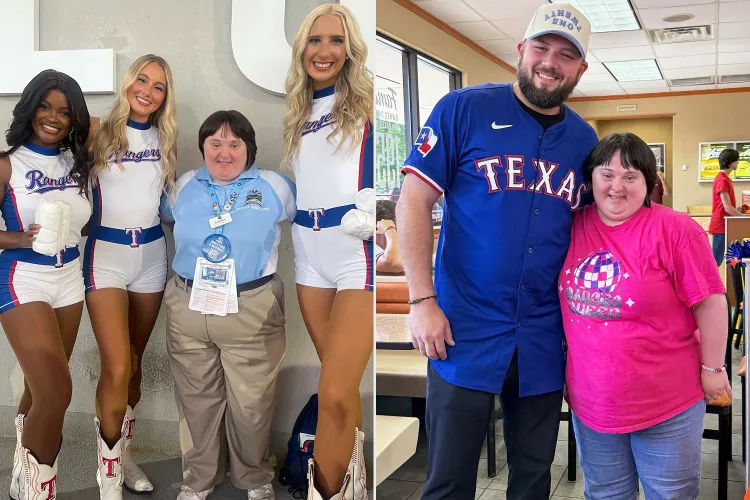
Hannah also enjoys spending time with the players, and her favorite is Rangers first baseman Jake Burger.
That connection has an especially meaningful dimension.
Burger has a young daughter with Down syndrome.
For a family raising a child with Down syndrome, seeing an adult like Hannah thriving in a visible workplace can offer a picture of the future that goes far beyond statistics or medical discussions.
It shows independence.
Employment.
Community.
Friendship.
And, in Hannah’s case, the freedom to become known for something as simple and joyful as being the person who cannot resist dancing when a favorite song starts.
That visibility is part of why stories like Hannah’s matter.
She is not inspiring people because she is performing some extraordinary stunt.
She is inspiring them because she has built a life around work she enjoys and has become valued for exactly who she is.
The Ballpark Also Keeps Her Close to Her Brother
There is another reason Hannah’s job means so much to her.
Long before she became an employee at Globe Life Field, baseball was connected to her family.
Hannah attended games with her brothers, Spencer and Seth, when they were younger.
Then, just two years after Hannah began working for the Rangers in 2012, Spencer died from a brain tumor at age 30.
His absence changed what the ballpark meant.
The place was no longer simply where Hannah worked or where the family had watched baseball.
It also became somewhere she could continue feeling connected to her oldest brother.
Charlotte recalled that both of Hannah’s brothers had been enormously proud of her.
Hannah says that connection remains with her when she dances.
It gives an unexpectedly emotional meaning to something fans may initially see only as entertainment on the jumbotron.
Every dance is fun.
But some of them are also for Spencer.
Her Mother Still Finds It Overwhelming
Watching Hannah become so recognizable has been emotional for Charlotte.
She told PEOPLE that her heart “nearly bursts” with pride when she thinks about what her daughter has accomplished.
It is understandable why.
The story began with uncertainty.
A tornado disrupted Hannah’s previous workplace.
She needed another job.
Her response was remarkably direct: she wanted the Rangers.
Fourteen years later, she is still there.
She has developed relationships with coworkers, players and fans.
Her dancing has put her on the jumbotron countless times.
Children now arrive at the ballpark and see someone with Down syndrome holding a real job, interacting confidently with thousands of strangers and being celebrated rather than underestimated.
Hannah did not set out to become a symbol.
She went to work.
The symbol came afterward.
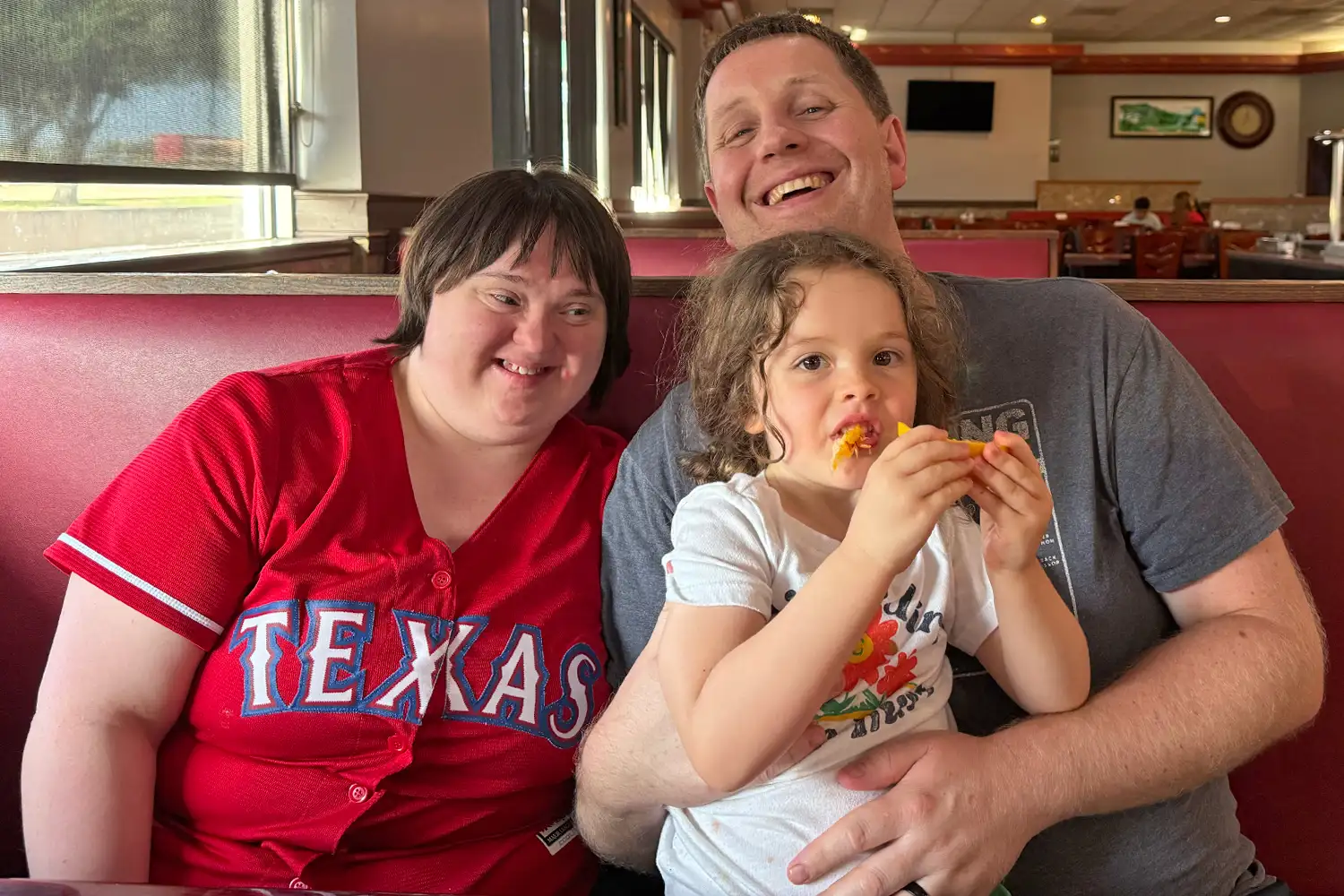
She Has No Plans to Stop Dancing
Hannah’s ambitions for the future are not complicated.
She wants to keep working for the Rangers.
The job gives her the interaction she loves, keeps her tied to family memories and allows her to make people happy.
And whenever the right song starts, there is always the possibility that the stadium camera will find her again.
That may be the most appealing part of Hannah Speirs’ story.
Her influence did not begin with a speech about overcoming limitations.
It began with a woman who knew where she wanted to work.
She got there.
Then she heard music and started dancing.
Now thousands of fans know her as the “Dancing Queen,” while children with Down syndrome can look toward the jumbotron and see something even more important.
A future that looks possible.
And Hannah intends to keep dancing through every game she can.