Behind the Adventure: Surprising Facts About 1999’s The Mummy
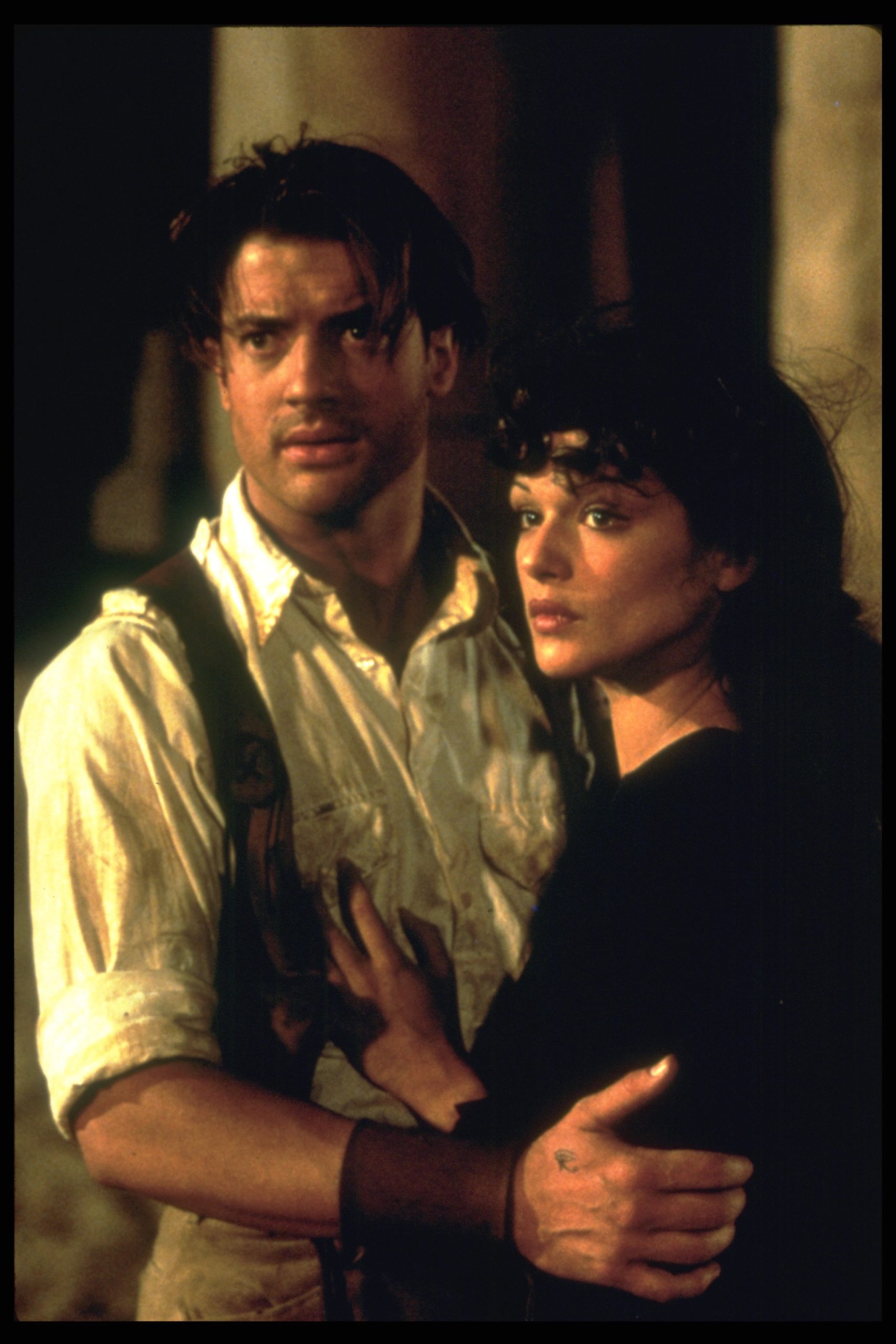
More than two decades after its release, The Mummy remains one of those rare blockbusters that seems to become more beloved with age.
Released in 1999 and directed by Stephen Sommers, the movie blended horror, comedy, romance and old-fashioned adventure into something Hollywood wasn’t producing very often at the time. Brendan Fraser’s Rick O’Connell was heroic without being overly serious, Rachel Weisz’s Evelyn Carnahan was intelligent, funny and fearless in her own way, and Arnold Vosloo turned the resurrected Imhotep into something more complicated than a standard movie monster.
The formula worked.
Made on a budget of roughly $80 million, the film earned around $150 million domestically and much more worldwide, eventually launching sequels and becoming one of the defining adventure movies of its era.
But getting The Mummy onto the screen involved nearly a decade of development problems, enormous desert sets, dangerous animals, grueling stunts and some very unusual precautions for the actors.
Here are some of the stories behind the movie that make its production almost as entertaining as the adventure itself.
The Movie Spent Years Trying to Escape Development Hell
The version of The Mummy audiences eventually saw was far from Universal’s original plan.
Universal had been searching for a way to revive its classic mummy property for years. The original 1932 film, starring Boris Karloff, was much more firmly rooted in horror, and several filmmakers considered taking a similarly dark approach to a modern remake.
The project passed through numerous writers and directors over roughly nine years.
Among the filmmakers connected to potential versions were George Romero, Clive Barker, Joe Dante and Alan Ormsby. Some concepts were much darker than Stephen Sommers’ eventual movie. One version reportedly imagined the creature wreaking havoc around Beverly Hills, while another approach was closer in spirit to something like The Terminator.
Then Sommers arrived with a very different vision.
Instead of making another slow-moving monster movie, he wanted spectacle: ancient curses, armies, gunfights, romance, comedy and a mummy that could actually seem powerful enough to threaten modern heroes.
That decision ultimately defined the film.
Brendan Fraser Was Exactly the Kind of Hero the Movie Needed
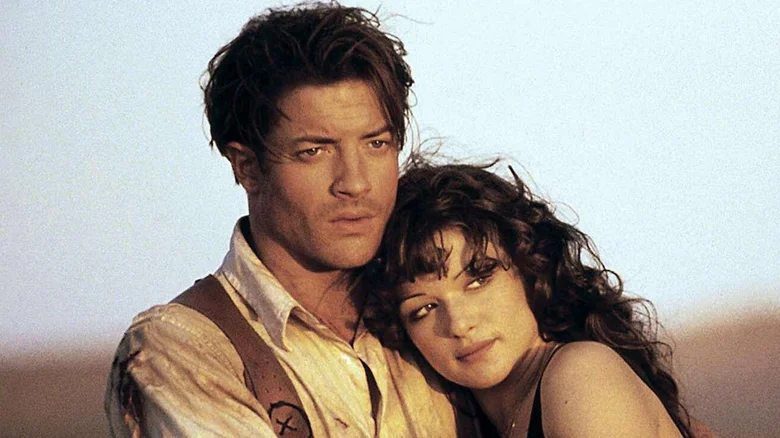
Over the years, rumors have circulated that various major stars were considered for Rick O’Connell, including names such as Tom Cruise and Ben Affleck.
But Sommers’ own recollections tell a simpler story.
His producing partner and editor Bob Ducsay read the script and immediately thought of Brendan Fraser. Sommers also believed Fraser possessed the unusual combination the character needed: he was physically imposing enough to be convincing in action scenes but naturally funny enough to prevent Rick from becoming another humorless action hero.
That balance became one of the movie’s greatest strengths.
Rick could shoot his way through an army of supernatural enemies one moment and look completely exasperated by Evelyn or Jonathan the next.
Fraser also arrived at an important point in his career. He had already demonstrated his comedic ability in movies including George of the Jungle, but The Mummy allowed audiences to see him as a full-scale adventure star.
Fraser’s Stunts Were More Dangerous Than They Looked
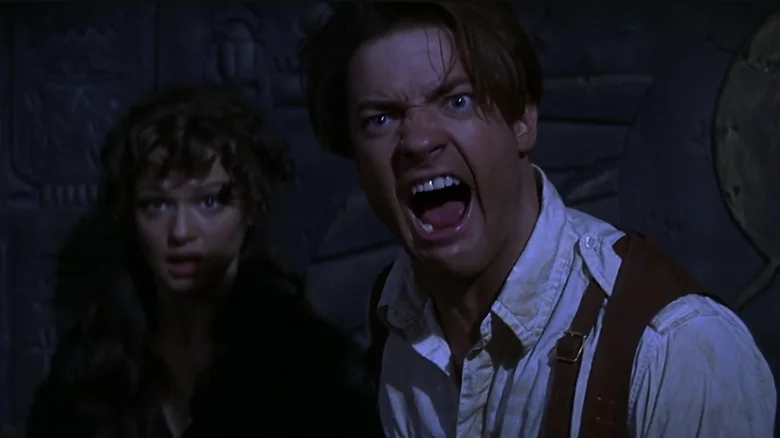
Rick O’Connell spends a considerable portion of The Mummy being punched, thrown, chased, shot at or nearly killed.
Fraser didn’t simply leave all of that punishment to stunt performers.
He performed significant amounts of the physical work himself, and one sequence became especially frightening.
Early in the movie, Rick is about to be executed by hanging. While filming close-ups during the sequence, Fraser has said that the rope became tight enough for him to lose consciousness.
He remembered his vision disappearing before eventually waking with medical personnel around him.
Sommers later offered a somewhat different account of exactly how the incident unfolded, but both versions make one thing clear: the stunt became far more real than anyone intended.
Years of physically demanding filmmaking eventually took a heavy toll on Fraser’s body. He later spoke about undergoing several operations after the Mummy trilogy and other action-heavy projects.
The effortless-looking adventure hero audiences saw on screen came at a significant physical cost.
Rachel Weisz Wasn’t Exactly Taking It Easy Either
Evelyn Carnahan may introduce herself as a librarian, but The Mummy doesn’t allow her to remain safely behind a desk for very long.
Rachel Weisz had to handle her own share of physically demanding scenes, including working around horses and camels.
One stunt became particularly memorable for a painful reason.
Weisz recalled filming a moment in which her character turns and shoots a rider from a horse. A pulley system was supposed to pull the stunt performer dramatically backward.
Instead, the stuntman broke both arms.
The shot still made it into the movie.
Before The Mummy, Weisz was known primarily from smaller projects and had not yet become a major Hollywood star. She later explained that a giant studio action movie wasn’t necessarily something she had been pursuing.
What caught her attention was Evelyn herself.
A librarian occupying the center of a giant action-adventure story was unusual enough to interest her — and the role ended up changing her career.
Morocco Was Beautiful — and Sometimes Terrifying
Much of The Mummy takes place beneath a punishing Egyptian sun.
The actors didn’t have to pretend very hard that conditions were uncomfortable.
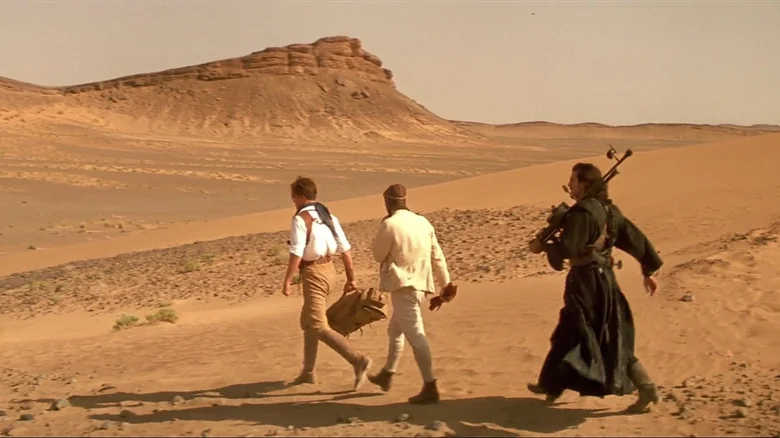
Rather than filming the major desert sequences in Egypt, the production moved to Morocco, particularly the desert surrounding Erfoud.
Temperatures could become extreme, reportedly reaching around 130 degrees Fahrenheit during parts of production.
Heat wasn’t the only danger.
Scorpions were enough of a problem that the production reportedly employed someone specifically to deal with them. Rachel Weisz recalled crew members being airlifted for treatment after scorpion bites.
Then there were snakes.
Fraser remembered receiving warnings about one particularly dangerous type of snake and what could happen if someone were bitten.
Naturally, he eventually looked down and discovered one near him.
His response wasn’t particularly heroic.
He ran.
The Cast Had Kidnapping Insurance
Venomous wildlife wasn’t the only danger producers were thinking about.
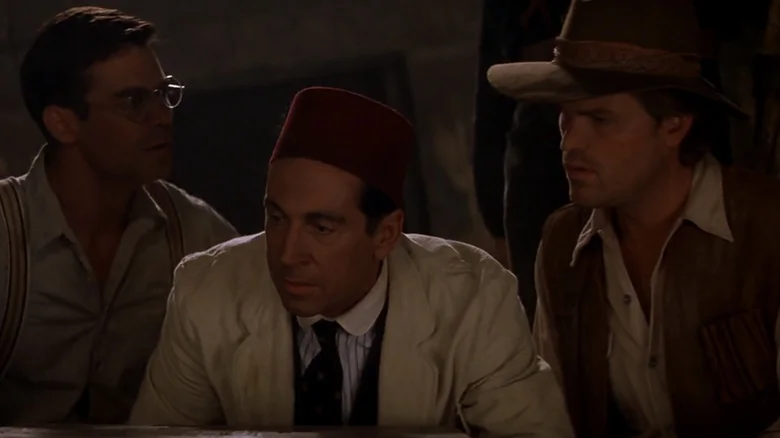
Filming a huge American production overseas created other security concerns, and producer James Jacks reportedly arranged kidnapping insurance for several of the movie’s stars.
According to Fraser, the policies covering some principal actors were valued at approximately $1 million.
Fraser remembered joking that describing the value of the insurance almost sounded like putting a price on the actors’ heads.
Kevin J. O’Connor, who played Beni, apparently discovered he was valued somewhat differently.
His policy was reportedly worth only about $50,000.
In typical Beni fashion, O’Connor found the situation amusing rather than insulting.
Hamunaptra Was Built in the Middle of the Desert
One of The Mummy’s most impressive achievements came long before visual effects were added.
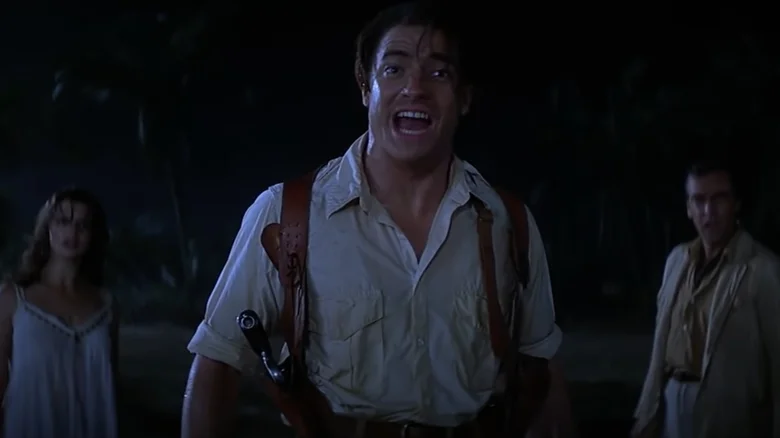
The production actually built a massive version of Hamunaptra in Morocco.
Production designer Allan Cameron discovered an extinct volcanic crater near Erfoud that offered exactly the kind of dramatic geography Sommers wanted for the legendary City of the Dead.
The logic worked beautifully for the story: an ancient city hidden inside a remote crater could remain invisible unless someone knew exactly where to look.
Construction reportedly took approximately 16 weeks.
The operation became enormous.
Hundreds of people had to be housed, transported, fed and protected in an area that normally wasn’t designed to support a Hollywood production of that scale. The production involved more than 800 people at certain points, including approximately 200 Tuareg horse riders.
And because Hamunaptra needed to collapse during the finale, the set couldn’t merely look impressive.
Parts of it had to be engineered for destruction.
Egypt Wasn’t Actually Egypt
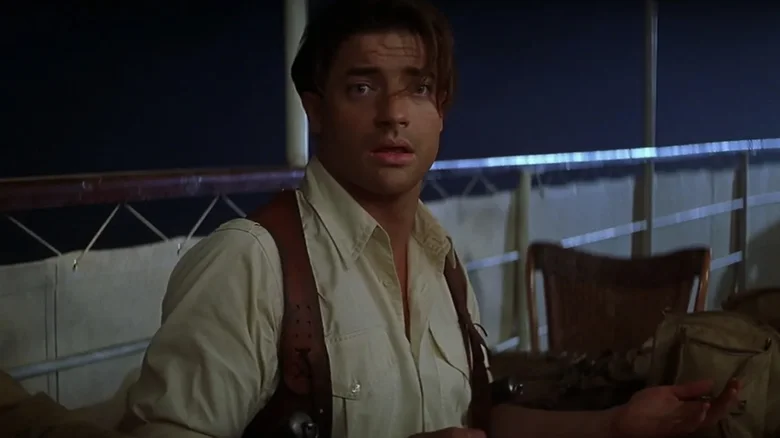
Despite the title and setting, much of The Mummy wasn’t filmed in Egypt at all.
Morocco doubled for the country in exterior sequences, while additional filming took place in England.
Marrakesh became 1920s Cairo.
The city’s older architecture made it useful for the period setting, although the production still needed to disguise modern features. Electrical wires and telephone infrastructure were removed or concealed to make streets appear as though they belonged several decades earlier.
Even the Cairo Museum had a Moroccan stand-in.
And perhaps the funniest geographic trick involves the river.
The Nile scenes weren’t filmed on the Nile.
They were shot on the Thames in England.
That makes Rick’s memorable taunting of Beni from the opposite side of the river slightly more amusing once you know both characters were technically arguing across a very British body of water.
The Production Took Ancient Egyptian Language Surprisingly Seriously
Nobody expects The Mummy to function as an Egyptology documentary.
After all, this is a movie in which a resurrected priest can transform himself into a giant wall of sand.
Yet the filmmakers made an effort to give certain elements of the story an authentic foundation.
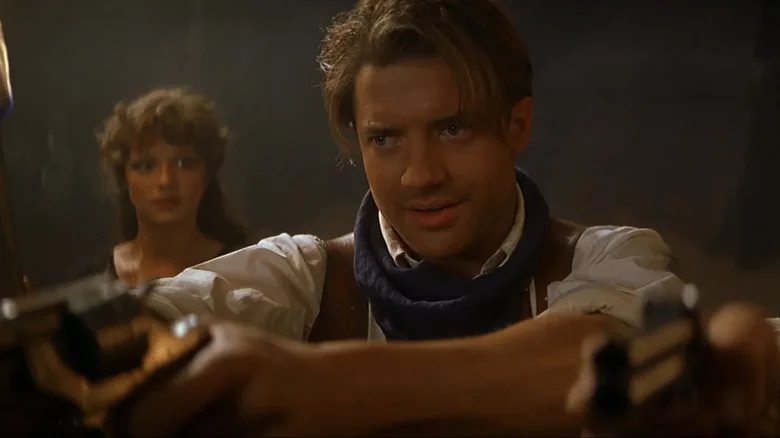
Egyptologist Dr. Stuart Smith of UCLA worked with the filmmakers on the ancient Egyptian dialogue.
Because nobody could simply listen to recordings of people speaking the language thousands of years ago, the process required reconstruction and phonetic coaching.
Arnold Vosloo worked extensively on the pronunciation of Imhotep’s dialogue, sometimes studying late into the night to prepare his lines.
The production design team also conducted significant historical research.
Cameron studied material at the British Museum, including documentation produced during Napoleon’s expedition to Egypt, using the artwork and archaeological records as visual inspiration.
So although the supernatural story was intentionally larger than life, its creators still wanted the surrounding world to feel convincing.
Imhotep Was a Real Historical Figure — Just Not an Undead Monster
The movie’s villain wasn’t given a random Egyptian-sounding name.
Imhotep actually existed.
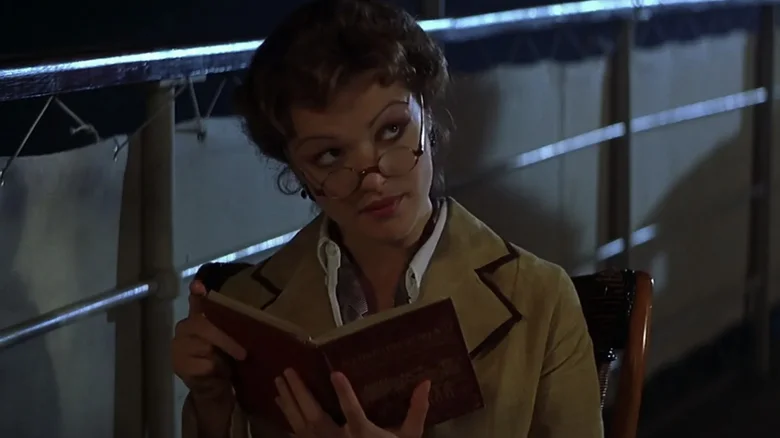
The historical Imhotep lived thousands of years ago during the reign of Pharaoh Djoser. He became famous as an architect, scholar and physician and is closely associated with the Step Pyramid of Djoser at Saqqara.
His reputation became so extraordinary that generations after his death he was eventually deified and associated with medicine.
What history does not tell us is that he murdered a pharaoh because of a forbidden romance, was cursed through a horrific ritual and returned thousands of years later with control over sandstorms and flesh-eating scarabs.
That part belongs to Hollywood.
Hamunaptra, the mythical City of the Dead at the heart of the movie, is fictional as well.
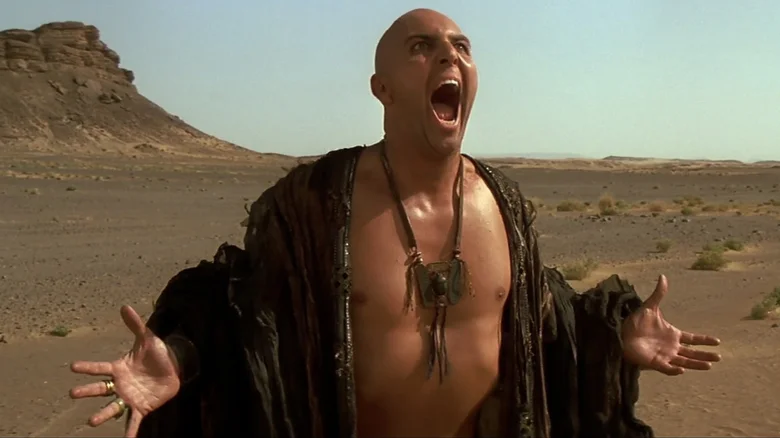
Arnold Vosloo Wanted Imhotep to Be More Than a Monster
Arnold Vosloo could easily have played Imhotep as a simple supernatural villain.
He deliberately chose not to.
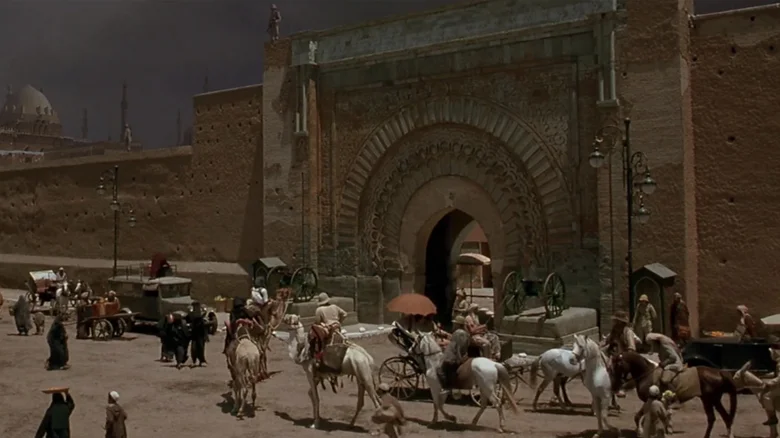
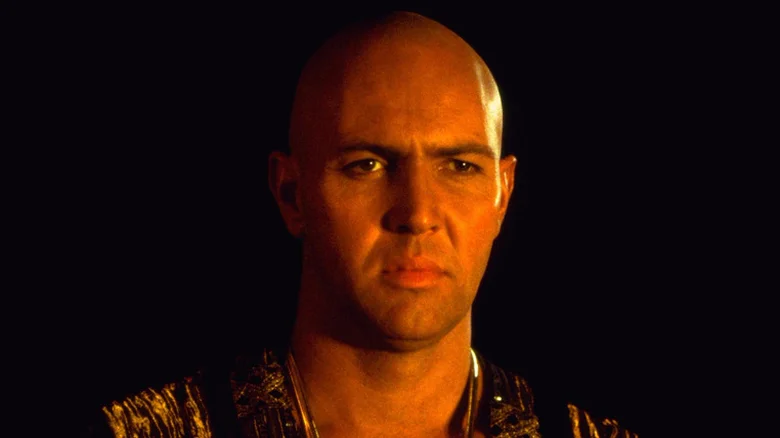
Sommers reportedly knew very quickly during Vosloo’s audition that he had found his mummy. The actor brought an intimidating seriousness to the role, something that helped balance the comedy happening around him.
Vosloo’s approach was to treat Imhotep’s motivations sincerely.
From his perspective, the character wasn’t waking up after thousands of years simply because he enjoyed destroying things. Everything centered on Anck-su-namun.
Imhotep was essentially a man willing to challenge death itself to reunite with the woman he loved.
Vosloo also influenced the character’s physical appearance. After researching Egyptian priests, he learned that they would have removed their body hair.
He suggested shaving completely for the role.
The idea stuck — giving audiences the distinctive Imhotep seen in the finished movie.
Beni Became Funnier Because Kevin J. O’Connor Kept Adding Details
Rick O’Connell needed a villain he could fight.
He also needed someone he could insult.
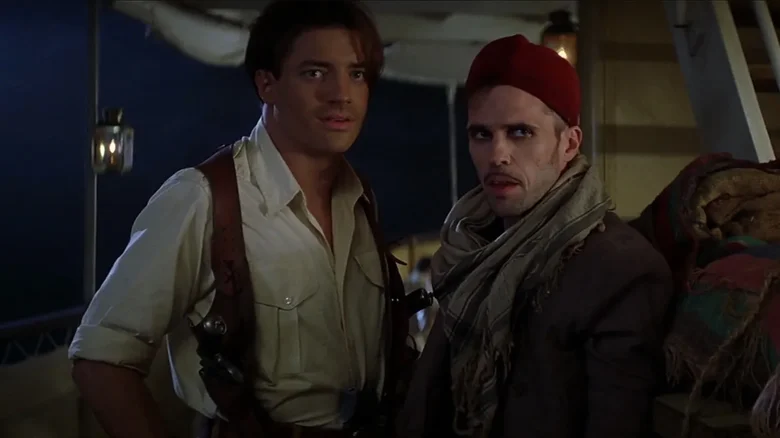
That person was Beni Gabor.
Kevin J. O’Connor had previously worked with Sommers on Deep Rising, and the director believed he was ideal for the cowardly, opportunistic former acquaintance who eventually becomes Imhotep’s servant.
O’Connor helped shape Beni beyond what appeared on the page.
He pushed for clothing that didn’t quite fit properly, grew the character’s mustache and chose open-toed sandals to make Beni appear even more ridiculous.
The sandals quickly became something he regretted while standing around in an actual desert full of creatures.
O’Connor also contributed to Beni’s dialogue.
His admiring comment about Imhotep’s spectacular sand-wall trick was improvised as part of the character’s constant attempt to flatter his terrifying new employer.
Interestingly, Beni almost wasn’t finished after the first movie.
Sommers and O’Connor discussed potentially resurrecting him as a damaged mummy for The Mummy Returns. The sequel already had too much happening, however, and the idea was abandoned.
The Movie’s Casting Has Been Reconsidered With Time
The Mummy remains enormously popular, but some aspects of the 1999 production have been viewed differently as Hollywood conversations about representation have changed.
Vosloo himself later acknowledged that a South African white actor might not be cast as an ancient Egyptian character if the movie were being made today.
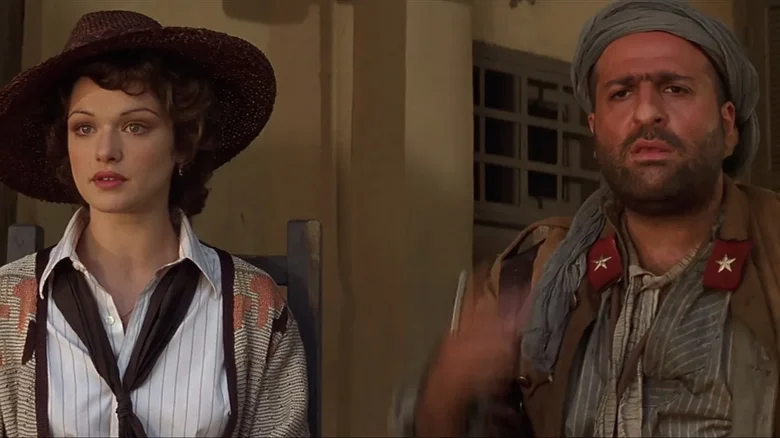
Omid Djalili, who portrayed prison warden Gad Hassan, was already thinking about stereotypes during production.
Because of his Iranian background, Djalili was conscious of the limited and often negative roles available to actors of Middle Eastern heritage at the time. He discussed the character with Sommers and encouraged the director to let him make the warden more comedic rather than simply playing another threatening Middle Eastern villain.
Those conversations don’t erase the movie’s popularity, but they illustrate how dramatically expectations surrounding Hollywood casting and representation have evolved since the late 1990s.
The Chaos Somehow Produced a Modern Adventure Classic
On paper, The Mummy could easily have failed.
It was based on a monster property dating back to the 1930s. It had spent nearly a decade cycling through creative approaches. Its final version mixed horror, romance, slapstick comedy, supernatural mythology and Indiana Jones-style adventure.
Then the production headed into the Moroccan desert with hundreds of people, enormous sets, dangerous animals and actors performing physically punishing sequences.
Yet almost everything that could have made the movie ridiculous ended up becoming part of its charm.
Brendan Fraser understood that Rick O’Connell could be heroic without constantly proving how tough he was.
Rachel Weisz made Evelyn intelligent and capable while still allowing her to be funny and occasionally chaotic.
Arnold Vosloo played Imhotep seriously enough that the supernatural threat never became a joke.
And Stephen Sommers treated the entire thing as exactly what it needed to be: an adventure.
That balance helps explain why The Mummy continues to find new audiences decades after its release.
Many blockbusters from 1999 now feel unmistakably tied to their era.
The Mummy somehow still feels like an invitation.
Open the mysterious book, ignore every warning, walk into the ancient tomb — and enjoy the consequences.