Anonymous Tip Leads Police to Woman Sought in Multiple Target Shoplifting Investigations
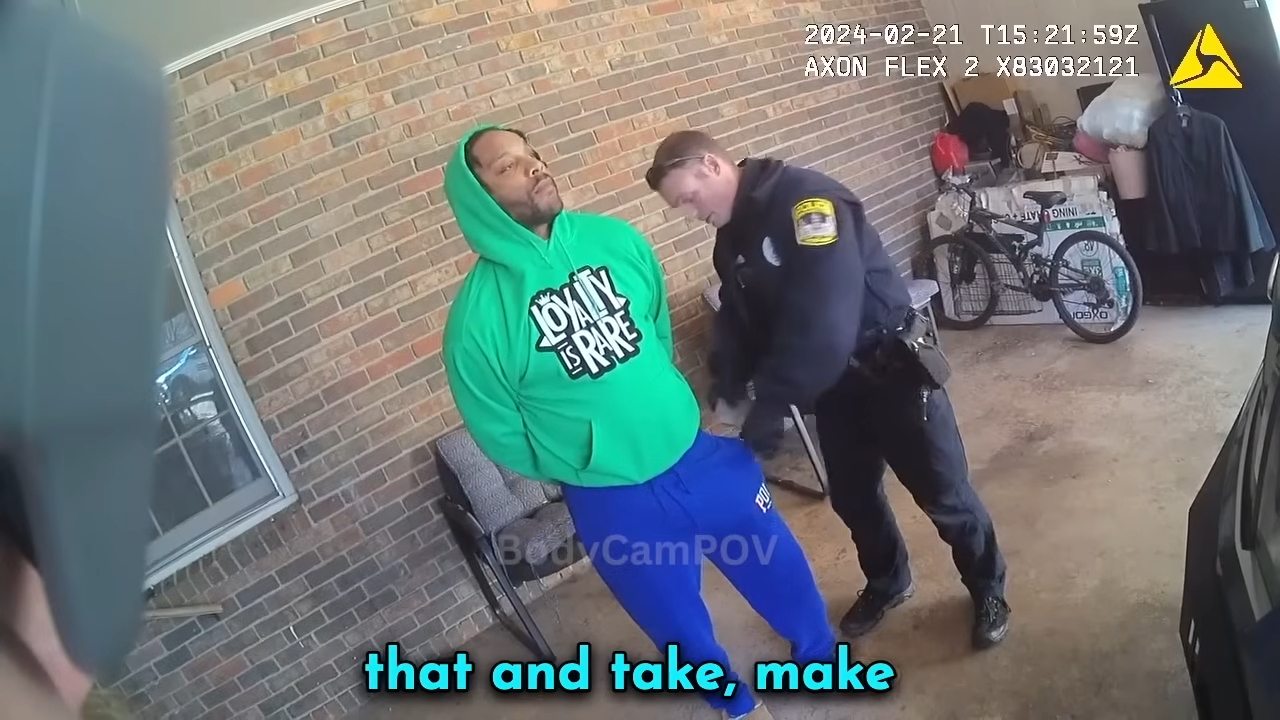
An anonymous tip was all officers needed to turn a series of surveillance images into a face-to-face encounter at the front door of a private home.
Body-camera footage recorded on February 21, 2024, shows officers arriving at a residence while looking for a woman they believed was connected to several recent shoplifting incidents at a local Target store. What begins as a relatively quiet visit quickly develops into a detailed conversation involving security photographs, a vehicle parked outside, questions about the woman’s identity and, eventually, an acknowledgment that she appears in at least some of the images investigators brought with them.
The three video clips do not show the final legal outcome of the investigation. But they provide a close look at how officers moved from an anonymous piece of information to locating and questioning the woman they had been seeking.
Police Arrive After Receiving an Anonymous Tip
According to the introduction accompanying the body-camera footage, officers had received an anonymous tip telling them where they could find a woman connected to multiple recent shoplifting cases involving a Target store.
The footage shows an officer approaching a brick residence during the afternoon and knocking at the door.
There is no immediate dramatic confrontation.
Instead, officers wait outside and begin looking at the information available to them.
A pickup truck parked near the residence attracts their attention. While waiting for someone to answer the door, police run the truck’s license plate, adding another piece of information to the investigation.
It is a small detail, but one that illustrates how such cases can develop. Investigators may begin with store surveillance footage and a tip, but identifying a person often requires connecting several separate pieces of information — photographs, vehicles, addresses and records — before officers can determine whom they need to question.
Eventually, someone answers the door.
The officer asks whether a woman named Cameron is at the residence.
The woman at the door confirms that Cameron is her daughter.
The officer makes his purpose clear: he needs to speak with her.
Rather than immediately making an accusation, he returns to retrieve a folder containing information related to the Target incidents.
When he comes back, the investigation becomes far more specific.
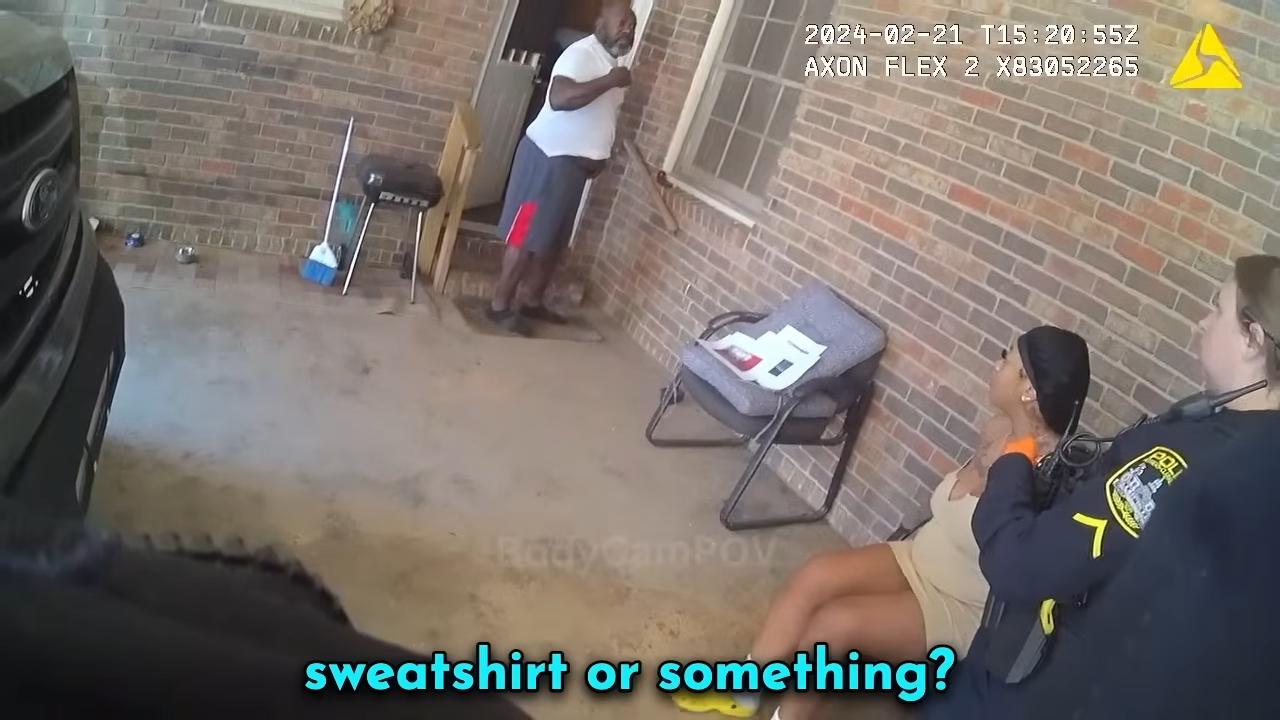
Officers Bring Surveillance Photos to the Door
Inside the folder are printed images that appear to have been taken from store surveillance footage.
The officer explains that he is investigating alleged stealing from Target and begins showing the photographs to the women standing in the doorway.
A younger woman appears alongside the first woman, and the officer starts comparing the person in front of him with the images he brought.
The exchange is calm but increasingly direct.
Instead of relying only on his own visual identification, the officer allows the woman to examine the photographs herself.
That decision produces one of the most significant moments in the footage.
As the officer moves through the images, the woman appears to acknowledge that she is the person shown in two of the photographs.
At one point, the officer indicates an image and essentially tells her that he knows that particular photograph shows her.
The discussion then turns to the remaining images.
The woman does not simply accept every photograph as being her. She distinguishes between the pictures she recognizes and those she disputes, prompting the officer to ask which other image depicts her.
That distinction matters.
Recognizing oneself in a surveillance photograph is not automatically the same thing as admitting to shoplifting. The videos show an identification discussion, but the short excerpts do not contain enough information to establish what happened during every alleged incident or what evidence police possessed beyond the photographs.
Still, from an investigative standpoint, the encounter gives officers something important: the woman is personally reviewing the evidence and responding to it in real time.
The Officer Says There Were Repeated Incidents
The conversation also makes clear that police were not asking about a single isolated visit to the store.
The officer refers repeatedly to multiple shoplifting incidents and indicates that the conduct under investigation had allegedly happened more than once.
As he sorts through the photographs, he explains that investigators had been researching the cases and attempting to connect the person captured on surveillance footage to an identity and location.
The woman questions how police arrived at the house, apparently surprised that the investigation had reached her residence.
The officer’s response suggests that police had conducted additional research after receiving information related to her identity and address.
Combined with the license-plate check shown earlier, the footage demonstrates how investigators can work backward from limited evidence.
A retailer may have security images but no confirmed name. A tip may provide a possible location. A vehicle outside that location may provide another connection. Records and investigative research can then help officers determine whether those separate pieces of information point toward the same person.
By the time police are standing at the doorway with printed surveillance photographs, the encounter is no longer based solely on an anonymous accusation.
They have arrived prepared to ask specific questions about specific images.
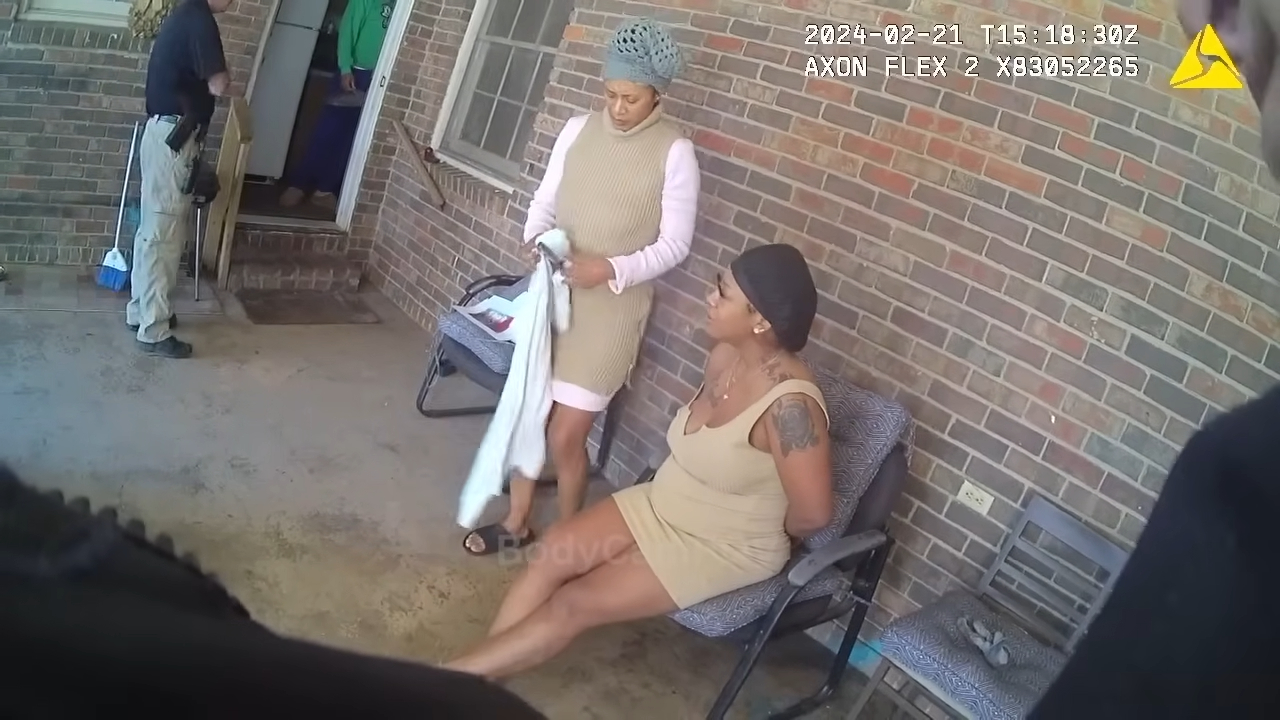
A Surprisingly Low-Key Encounter
Perhaps the most striking element of the footage is how ordinary the scene appears.
There is no foot chase, no forced entry and no immediate physical confrontation.
The officer stands outside the home holding paperwork while the women examine photographs and answer questions.
That calm setting contrasts sharply with the seriousness of the allegation.
Retail theft investigations often unfold long after the suspected act itself. Unlike cases in which a person is detained while leaving a store, repeated shoplifting investigations can involve reviewing hours of video, comparing separate incidents, identifying vehicles and attempting to establish whether the same person appears on different dates.
The body-camera clips appear to capture the point where that behind-the-scenes investigation finally reaches the person police believe is involved.
And rather than beginning with handcuffs, it begins with a simple question at a doorway.
Are you the person in these pictures?
What the Videos Do — and Do Not — Establish
The three clips end without showing whether anyone was arrested, formally charged or ultimately convicted.
That is an important limitation.
The footage documents police questioning a woman about alleged Target shoplifting incidents and shows her apparently identifying herself in two surveillance images. It does not, by itself, prove the circumstances surrounding every photograph or establish the final disposition of any criminal case.
The legal distinction is significant: appearing in a store surveillance image is different from admitting that a theft occurred.
What the videos do reveal clearly is the investigative process.
Police received an anonymous tip. They traveled to the address. They checked a vehicle outside. They confirmed that the person they wanted to speak with was associated with the home. Then they produced surveillance photographs and asked her directly about them.
Within only a few minutes of body-camera footage, an investigation that began with unidentified images becomes a conversation with the person officers had been trying to locate.
And the turning point comes not with a dramatic arrest, but with the woman looking at the photographs in the officer’s hands and acknowledging that at least two of them appear to be her.