People Have Watched Mrs. Doubtfire for 33 Years. Sally Field Says One of Its Most Famous Reactions Was Never in the Script
For more than three decades, audiences have watched Mrs. Doubtfire knowing exactly what is coming.
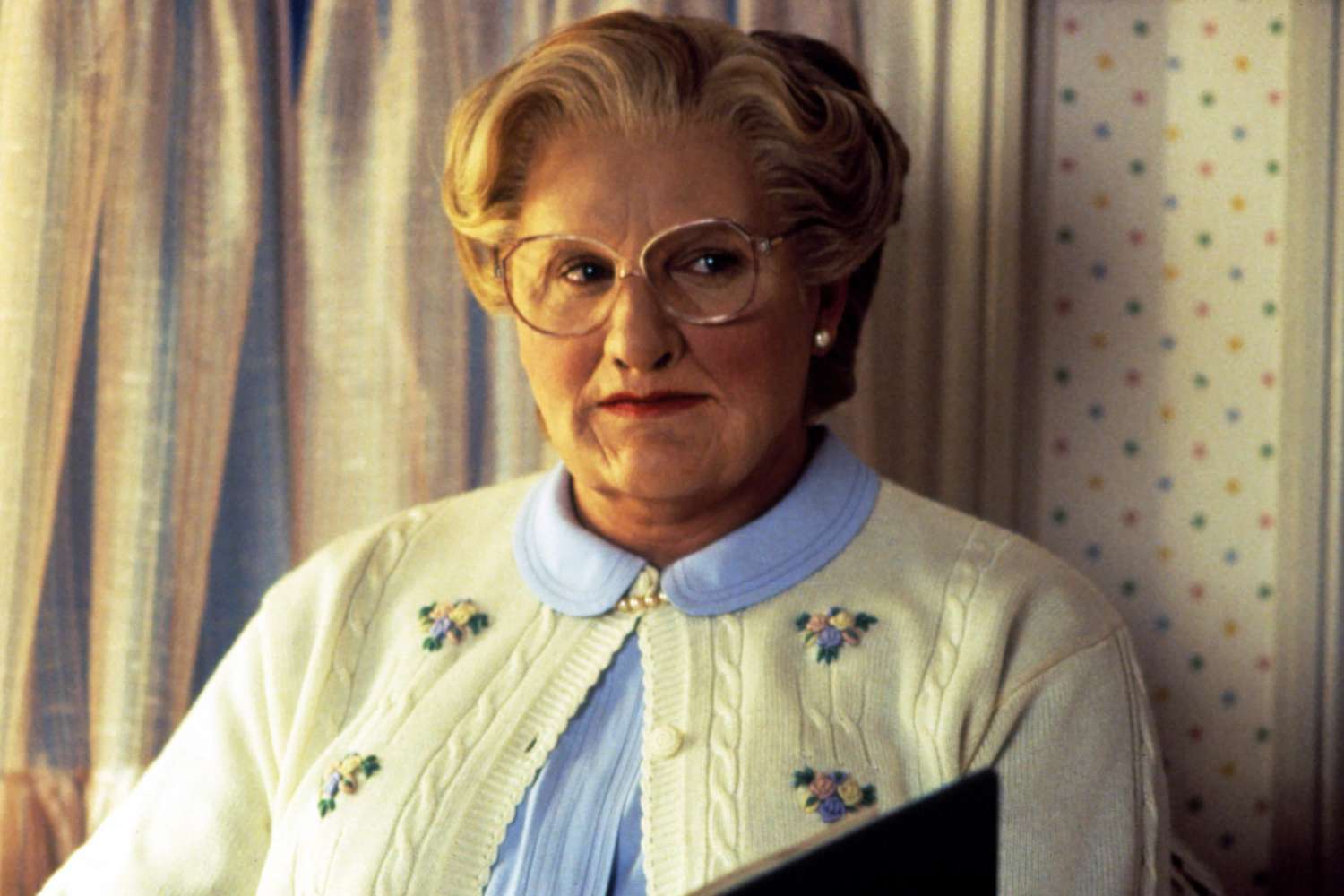
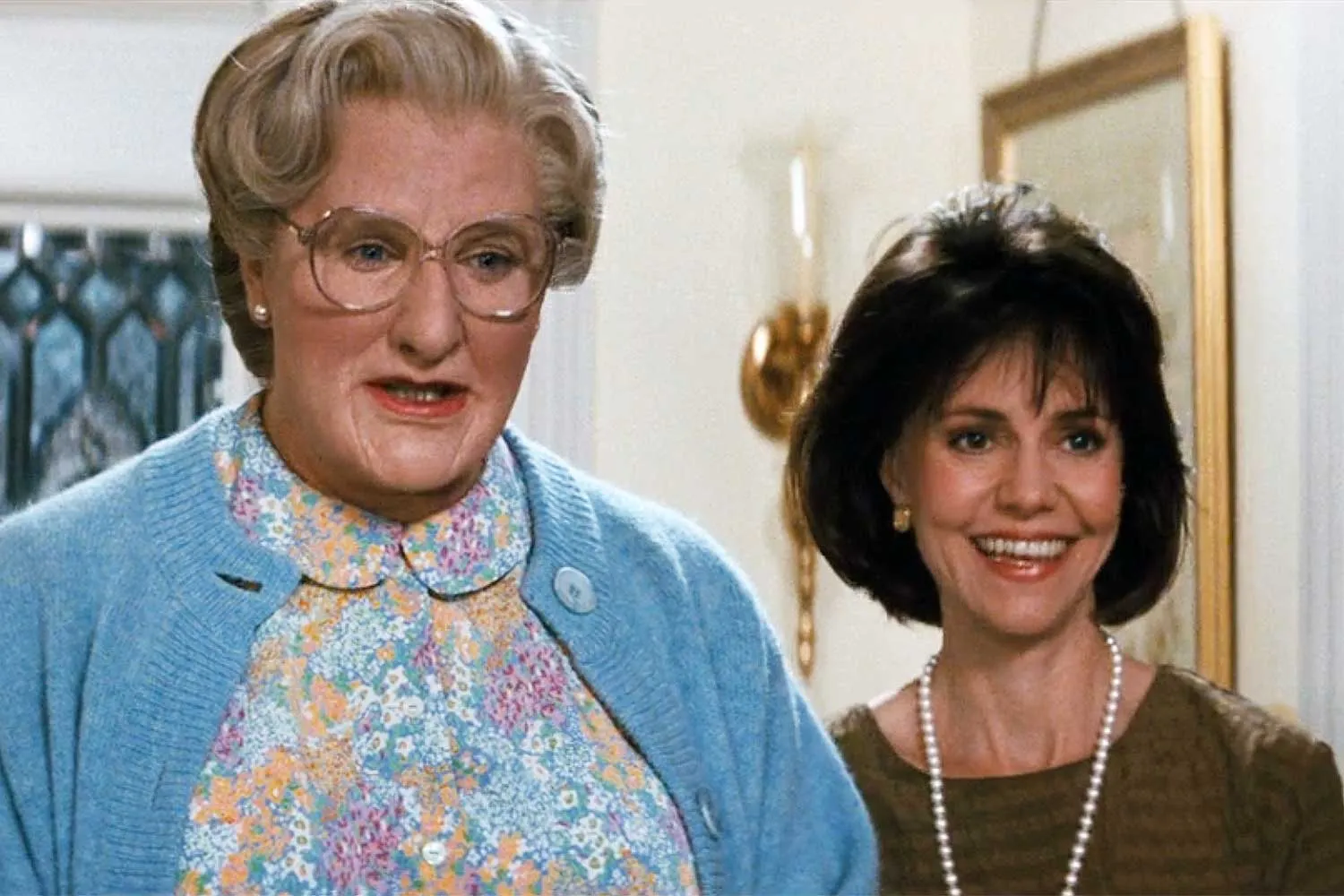
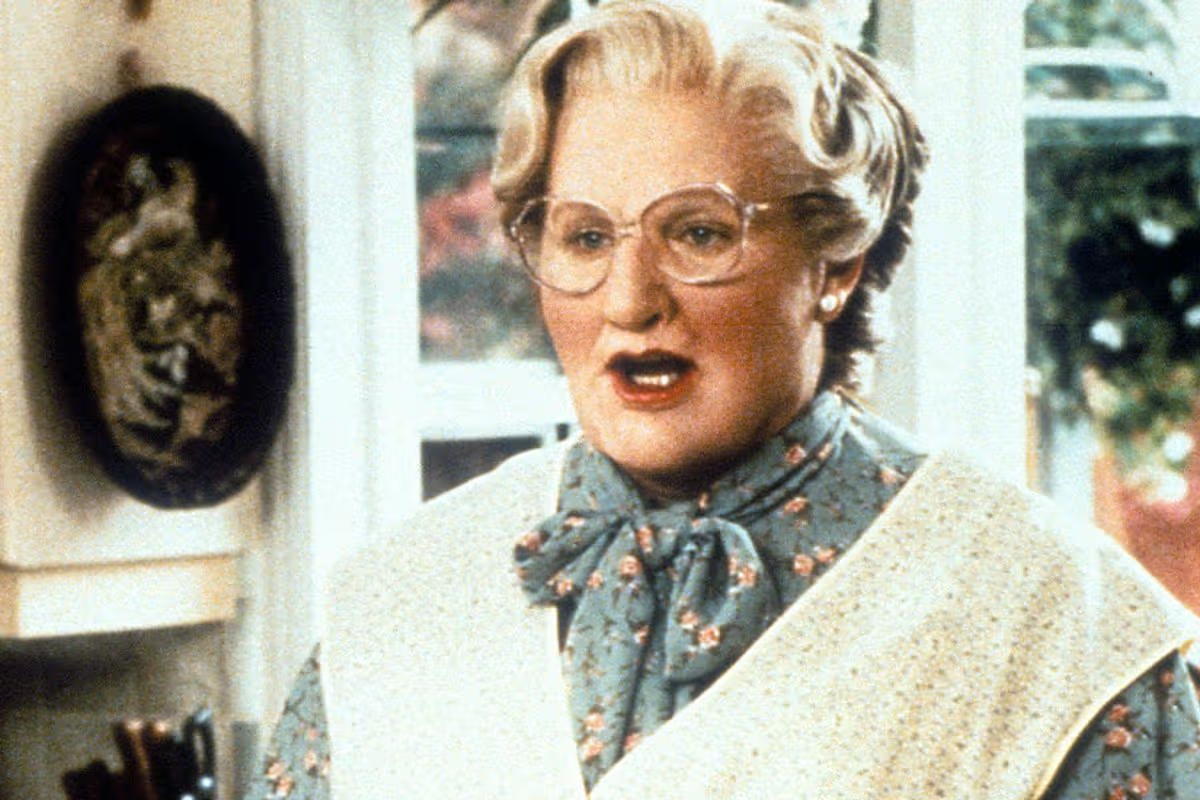
They know Robin Williams’ Daniel Hillard is hiding beneath the wig, glasses, makeup and elaborate Scottish accent. They know his estranged wife Miranda, played by Sally Field, has no idea that the dependable older nanny spending so much time inside her home is actually her husband in disguise.
And they know that eventually, the secret has to fall apart.
But according to Field, one of the most memorable pieces of Miranda’s reaction when the truth finally emerges was never supposed to happen the way audiences saw it.
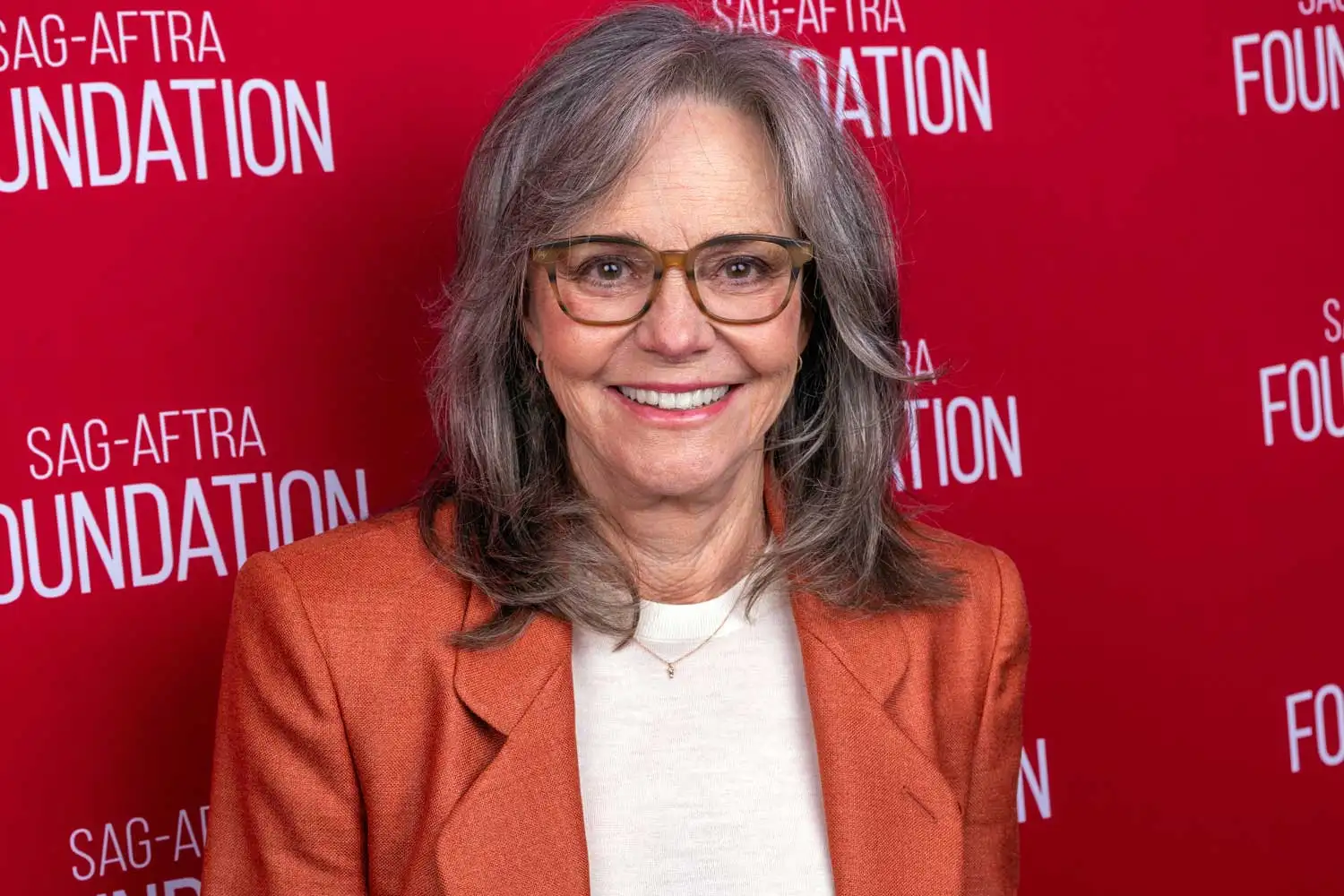
In a new interview, the two-time Oscar winner revealed that her increasingly stunned delivery of the words “The whole time?” during the movie’s famous restaurant sequence was an improvisation.
The script, Field said, called for something much calmer.
What appeared onscreen came from her instead.
A Famous Scene That Was Supposed to Play Differently
Released in 1993, Mrs. Doubtfire follows Daniel, a devoted but chaotic father whose separation from Miranda limits the amount of time he can spend with their three children.
His solution is both ridiculous and ingenious.
Daniel transforms himself into Mrs. Euphegenia Doubtfire, an older British nanny, and convinces Miranda to hire him without realizing who is beneath the disguise.
For much of the movie, the comedy depends on Daniel constantly moving between those identities while trying to prevent his deception from being discovered.
Eventually, everything comes crashing together in a restaurant.
Daniel is forced to move between being himself and appearing as Mrs. Doubtfire, and the increasingly complicated situation finally exposes the secret Miranda never imagined.
It is during that revelation that Field gives a reaction many longtime fans instantly recognize.
Miranda processes what she is seeing and realizes the person she trusted to enter her home and care for her children has actually been Daniel all along.
“The whole time?” she asks, her disbelief becoming more intense.
Field now says that particular emotional escalation did not come directly from the screenplay.
“That was me improvising,” she told The Hollywood Reporter, according to Entertainment Weekly’s report on the interview.
Field explained that the line had originally been intended to be delivered “very calm.”
Instead, she followed the shock of the moment and changed its energy.
Why Improvisation Worked So Well With Robin Williams
Anyone familiar with Robin Williams’ career knows improvisation was hardly unusual when he was involved.
Williams was famous for his ability to move rapidly between characters, voices, jokes and unexpected observations. His performances could make it difficult to tell where the screenplay ended and spontaneous invention began.
But Field’s new comments reveal something important about Mrs. Doubtfire: the freedom to improvise was not limited to Williams.
She said the two actors had developed a working relationship that allowed both of them to experiment.
“Robin and I had created a relationship, a world where we improvised a lot,” Field explained.
That freedom, she believed, helped make the unusual premise feel believable.
After all, Mrs. Doubtfire asks viewers to accept an extraordinary situation. Daniel does not merely put on a costume for a few minutes. He creates an entire identity, enters his former family home and maintains the deception long enough to become an important part of Miranda’s daily life.
For the movie to work, the characters surrounding him had to feel emotionally real even when the circumstances became absurd.
Field believes improvisation helped them achieve that balance.
The Restaurant Sequence Came Near the End of Filming
Field also revealed that the restaurant material was filmed toward the end of production.
The sequence took several days to complete, making it more than a quick reaction captured during a single take.
By that point, Field and Williams had already spent much of the production developing the rhythm between Miranda and Daniel.
That may help explain why her unscripted choice feels so natural.
Her reaction is funny because of the extraordinary situation Miranda has suddenly discovered, but it also carries genuine betrayal.
From Miranda’s perspective, she is learning several things almost simultaneously.
The nanny she trusted is not real.
The person behind that identity is her estranged husband.
And the deception has been happening directly in front of her for far longer than she understood.
Field’s increasingly alarmed “The whole time?” compresses all of that realization into a few seconds.
Knowing now that the script originally envisioned a calmer delivery changes the way the scene can be viewed.
What became one of its defining reactions was an acting choice made in the moment.
Field and Williams Were Protecting Something Bigger Than the Jokes
There was another challenge facing Mrs. Doubtfire that Field and Williams apparently took seriously.
They did not want Miranda to become the villain simply because she was the parent who ended the marriage and imposed limits on Daniel.
That would have been an easy choice for the movie.
Daniel is funny, affectionate and played by one of the most charismatic performers of his generation. Miranda is often the person demanding responsibility, setting boundaries and telling him that his behavior has consequences.
A less careful version of the story could easily have encouraged viewers to blame her for breaking up the family.
Field said she and Williams resisted that interpretation.
“We both felt that there were no villains in this divorce,” she explained.
Sometimes, she said, marriages simply do not last.
The filmmakers had to perform what Field described as a “delicate dance”: keeping the movie funny without making Miranda appear cruel for wanting stability.
That perspective is especially noticeable when watching the movie as an adult.
Daniel loves his children deeply, but Miranda’s frustrations with him are not difficult to understand.
Early in the film, for example, she returns home to discover that Daniel has turned their son’s birthday into an enormous, chaotic celebration.
For the children, he can be the endlessly entertaining father.
Miranda often has to be the adult who deals with what happens afterward.
“She was hurt to lose her marriage, too,” Field said, before adding a typically blunt observation about Daniel: “Who could be married to this guy?”
Nobody Expected the Movie to Become Quite This Big
Mrs. Doubtfire became one of the defining family comedies of its era and one of Williams’ most recognizable performances.
Field said those making the movie expected it to succeed, particularly because Williams was operating at an extraordinary creative level at the time.
What they apparently did not anticipate was just how large — or lasting — the film would become.
“I don’t think anyone saw it being as huge as it was,” Field recalled.
More than 30 years later, its biggest scenes remain instantly familiar to viewers who grew up watching the movie on VHS, cable television and countless family movie nights.
That familiarity is exactly what makes Field’s revelation so fascinating.
Fans have always known what Miranda says when Daniel’s secret finally collapses.
What they did not know was that the reaction they remember was not simply Sally Field performing what had been written for her.
The screenplay gave her the line.
Field gave the moment its panic.
And 33 years later, that small improvisation remains part of what makes one of Mrs. Doubtfire’s most famous scenes impossible to forget.