Fallen Deputy, High-Speed Pursuit, and the Fatal End of a Ruthless Manhunt
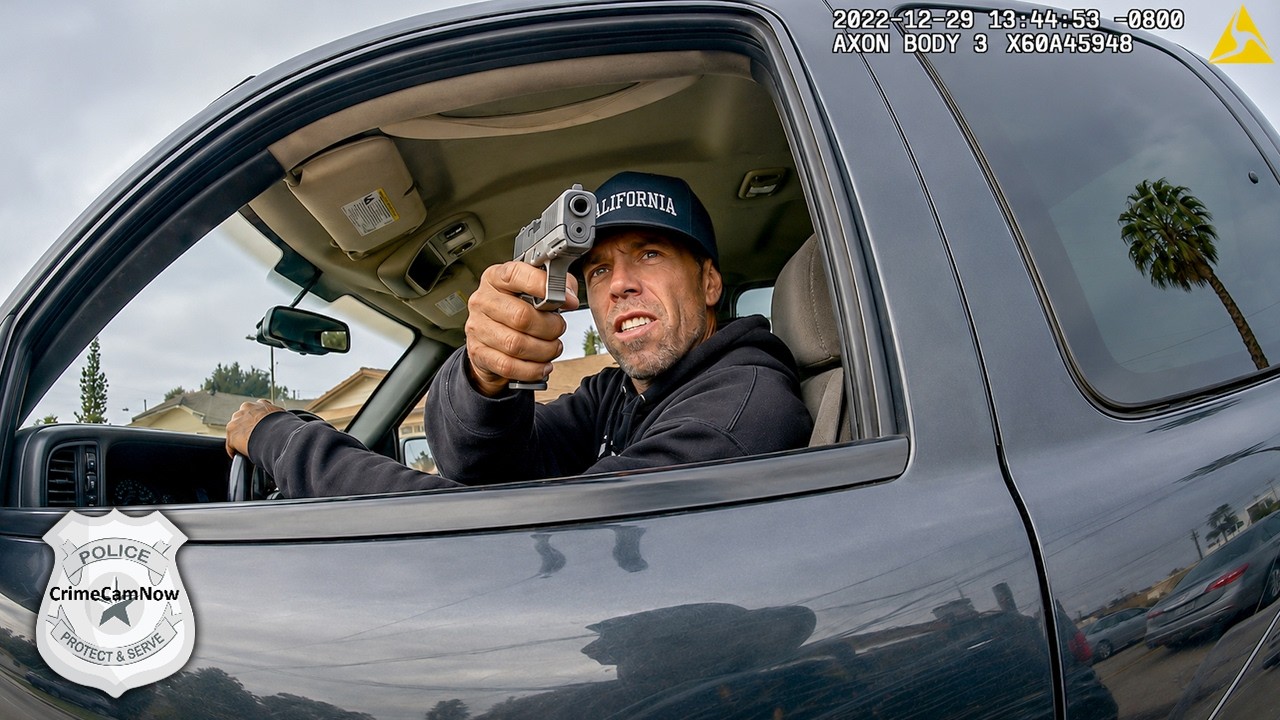
What began on a quiet afternoon as an ordinary traffic stop in Jurupa Valley rapidly transformed into one of the most harrowing line-of-duty tragedies in recent Southern California memory. When Riverside County Sheriff’s Deputy Isaiah Cordero pulled over a black pickup truck missing its rear license plate, he acted with the calm, measured professionalism that defines community policing. Within seconds, that standard enforcement action was shattered by sudden violence, sparking a desperate emergency response and a massive, cross-county pursuit at freeway speeds.
The fatal encounter unfolded after Deputy Cordero, serving as a dedicated motorcycle officer, approached the driver’s side of the pickup along a residential corridor east of Los Angeles. In newly released body-worn camera footage, Cordero engaged the driver cordially, asking whether the vehicle had valid registration tags. The driver offered casual, evasive excuses, suggesting the paperwork was likely at home. When the deputy requested his driver’s license and proof of ownership, the suspect apologized for the clutter inside the cab, claiming his identification was stored inside a bag on the passenger floorboard.
Feigning compliance, the man rummaged through the vehicle’s interior while apologizing for the delay. The apparent docility was a calculated ruse. As the deputy patiently waited near the window, the suspect reached into the bag, drew a concealed firearm, and discharged multiple rounds at point-blank range directly into the officer. Deputy Cordero collapsed instantly on the roadway as the suspect slammed the accelerator and fled the neighborhood at high speed.
Nearby residents and civilian witnesses immediately rushed to the fallen deputy’s side, attempting to provide trauma care and dialing 911. Within moments, dispatch channels erupted with the chilling distress call every law enforcement officer dreads: an officer down with severe, life-threatening gunshot wounds. Dispatchers promptly issued urgent commands over the radio network, ordering all non-critical units to hold routine communications and keep the air clear.
Emergency sirens filled the regional airspace as patrol cruisers, supervisors, and paramedics converged on the scene. Over the open tactical frequency, responding personnel communicated with breathless urgency, relaying critical medical updates as they arrived to find their colleague unresponsive on the pavement. First responders immediately initiated CPR, deployed automated external defibrillators, and cut through uniform gear in a desperate bid to stabilize Cordero. Despite heroic on-scene resuscitation efforts and emergency transport to a nearby trauma hospital, Deputy Cordero succumbed to catastrophic injuries and was pronounced dead, plunging the department into deep mourning.
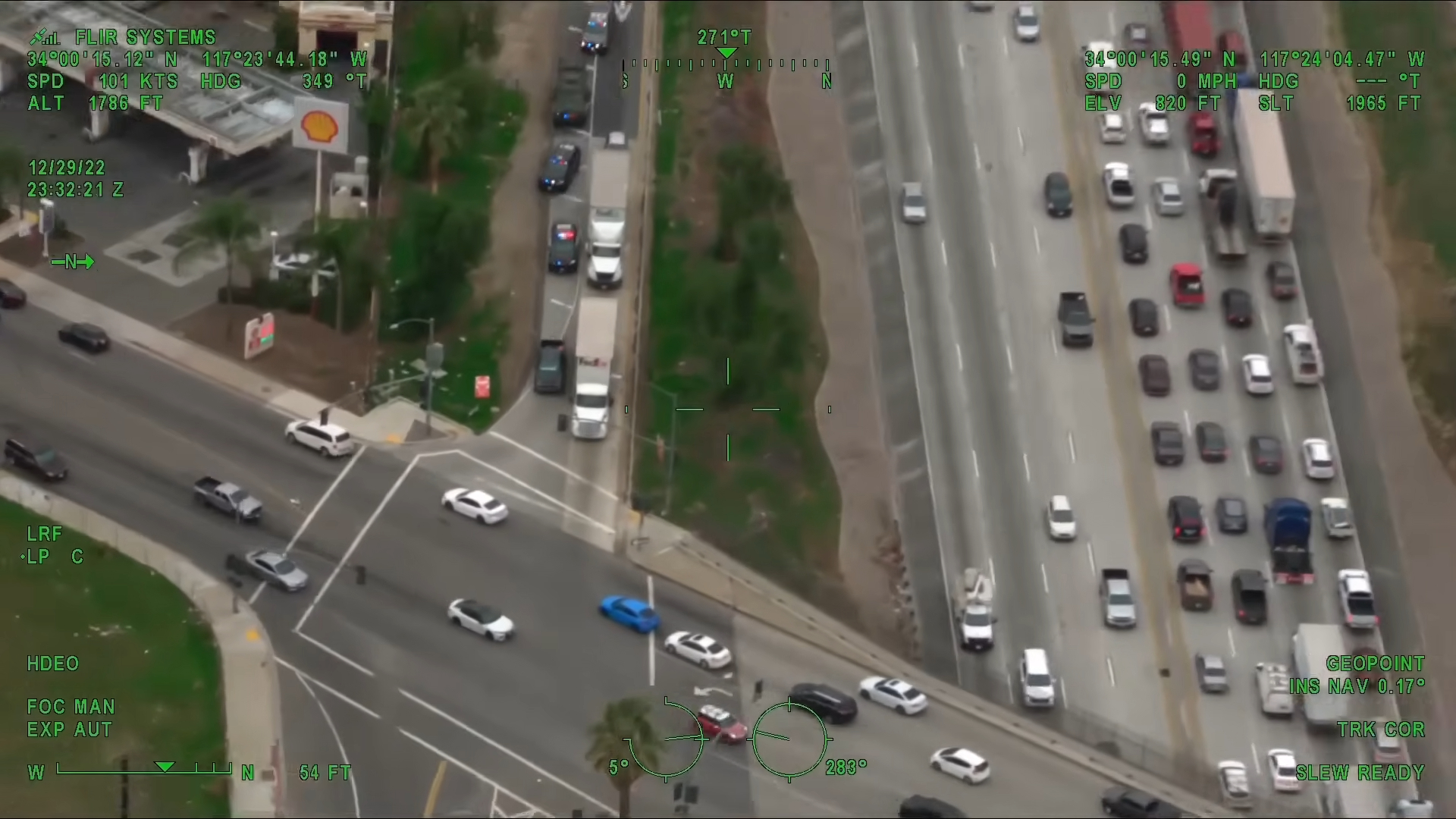
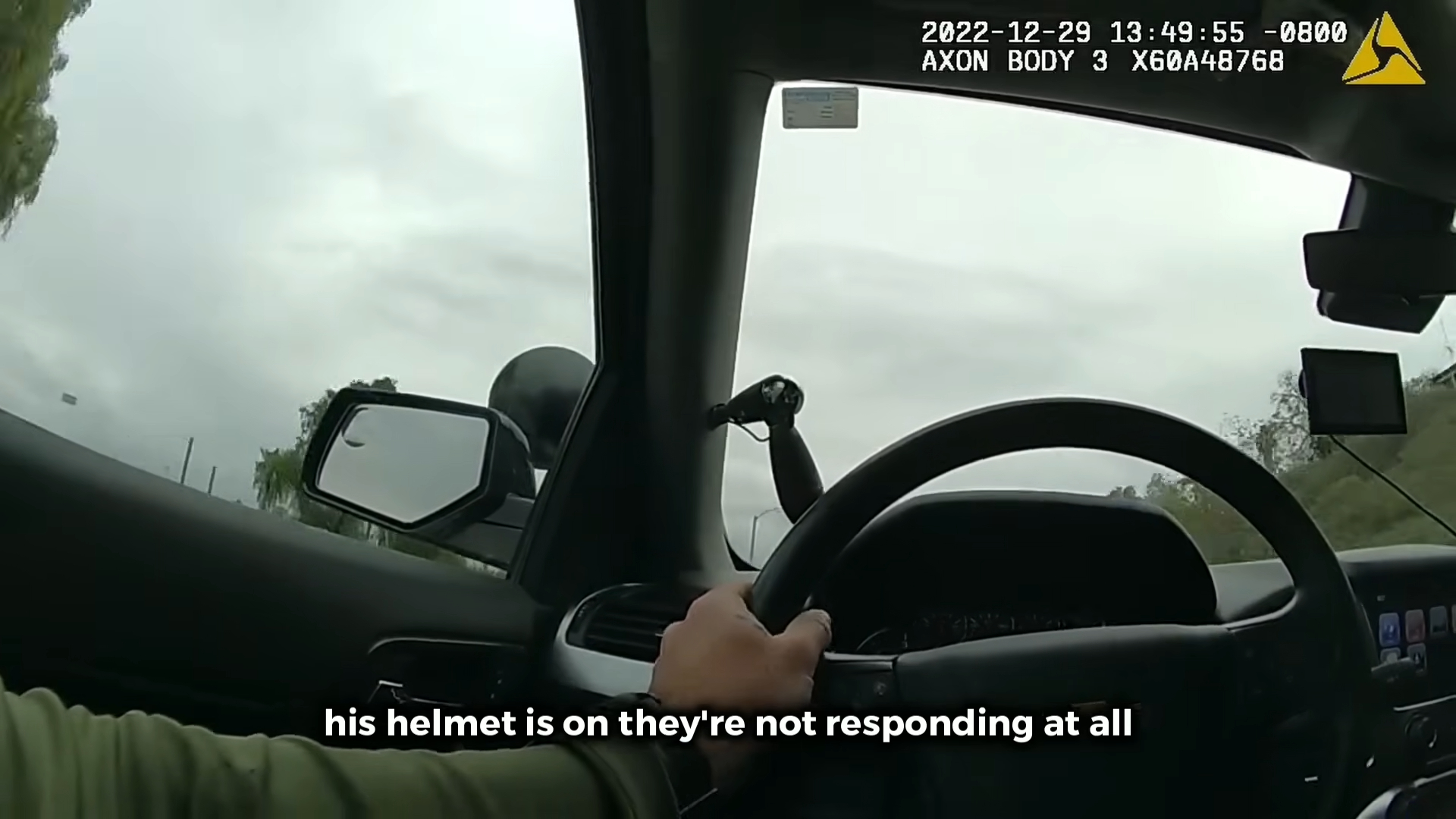
While investigators secured the primary shooting scene, law enforcement agencies across Southern California mobilized an unprecedented multi-jurisdictional manhunt. The suspect was quickly spotted in neighboring San Bernardino County, setting off a multi-agency pursuit that spilled onto regional freeways, including Interstate 15 and State Route 60. Traveling at speeds exceeding 90 to nearly 100 miles per hour, the fugitive wove aggressively through dense commercial and commuter traffic, demonstrating reckless disregard for the public.
Coordinating across agencies, pursuit commanders authorized proactive tactical interventions to disable the fleeing truck before innocent motorists could be harmed. Pursuing cruisers established coordinated formations while specialized tactical units, including heavy BearCat armored rescue vehicles, mobilized into position. Officers prepared to execute precision immobilization techniques while tactical teams on the freeway perimeter sought strategic choke points to deploy tire deflation devices.
Executing a spike strip maneuver at excessive highway speeds requires precise timing and razor-thin margins of error. Ahead of the oncoming chase, patrol officers positioned themselves safely along the highway shoulder, monitoring traffic density and communicating coordinates over tactical radio channels. As the black pickup approached the deployment zone in the fast lane, an officer cast the spikes directly into the vehicle’s projected path.
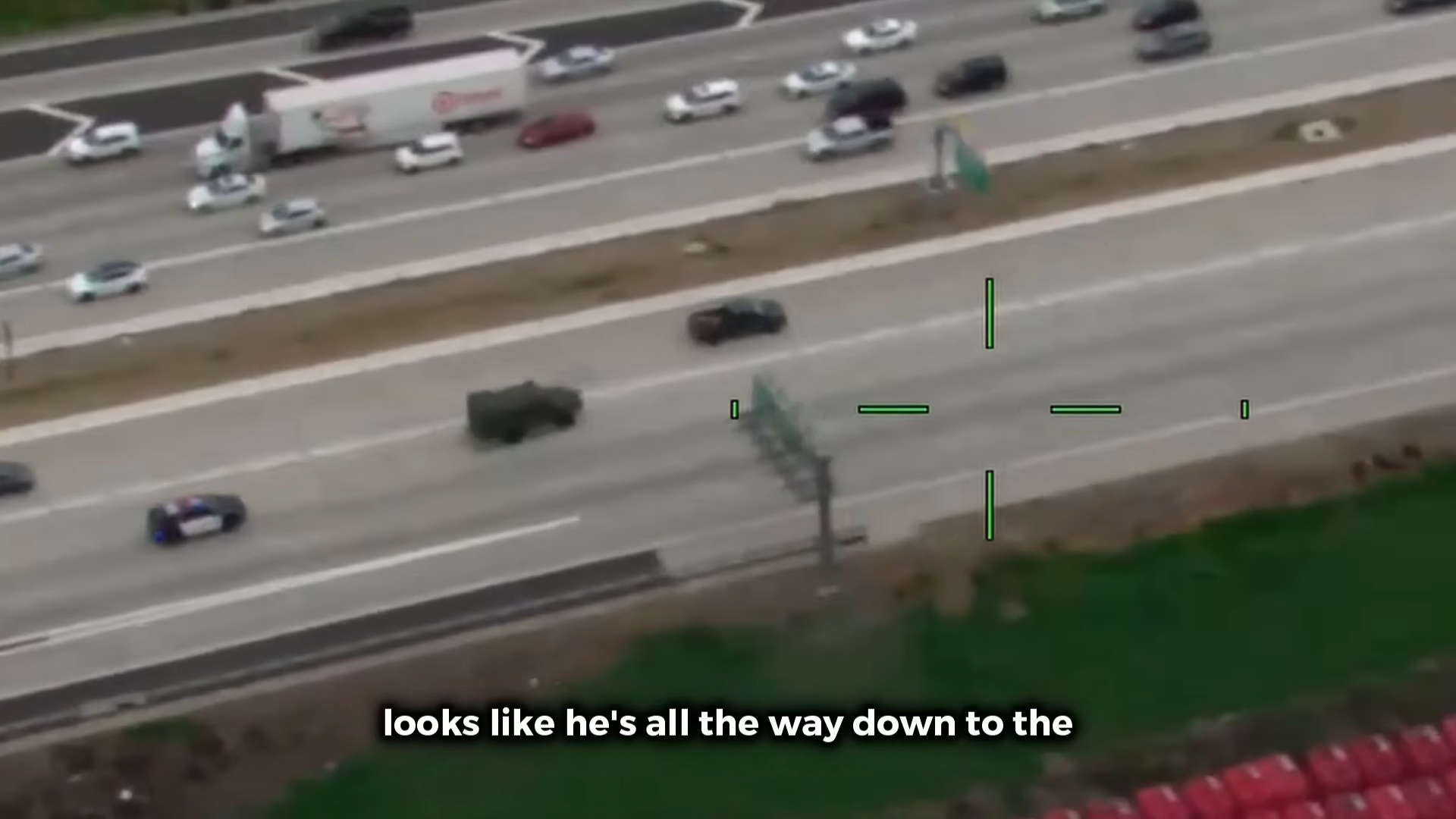
The deployment proved immediately effective. The truck struck the spikes at freeway speed, puncturing both rear and front tires in a sudden spray of debris. The spike strips successfully breached the rubber casings, triggering rapid tire deflation across the vehicle’s axles. Yet, even with heavy smoke billowing from underneath and both tires completely flattened, the suspect refused to surrender.
Instead of yielding, the driver continued to press forward on shredded rubber and disintegrating rims, stubbornly maintaining speeds between 30 and 50 miles per hour through heavy highway congestion. Sparks showered across multiple lanes as the metal wheels ground directly against the concrete freeway surface. With the suspect armed, volatile, and actively traversing two major metropolitan counties on bare rims, tactical teams closed the perimeter to end the deadly rampage before additional lives were lost.
The prolonged high-speed pursuit culminated along State Route 60, where armored vehicles ultimately executed a decisive intervention, boxing the disabled truck against the center divider. The encounter concluded when the armed suspect engaged pursuing deputies in gunfire, prompting officers to return fire, fatally wounding the shooter.
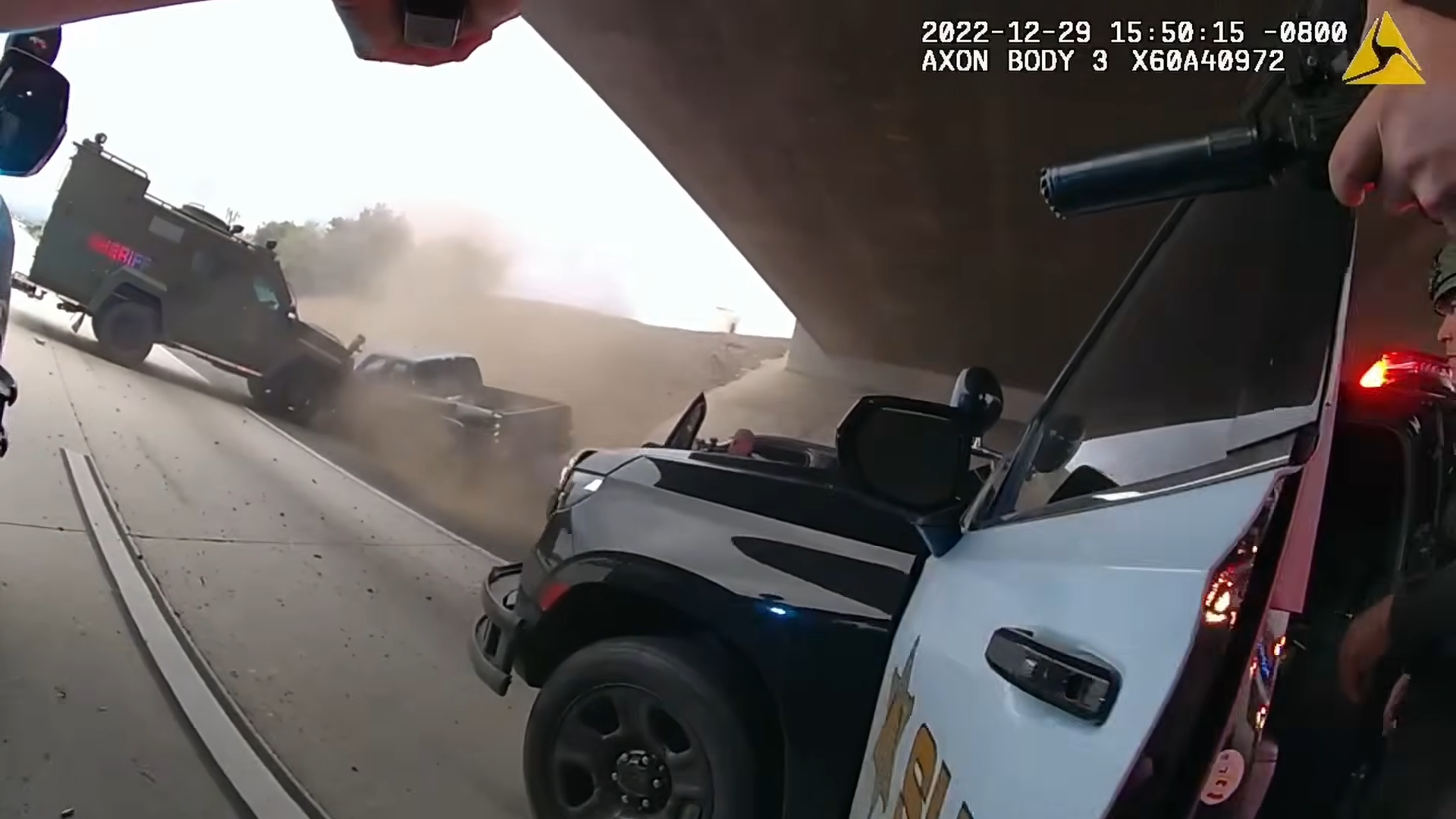
The tragedy of Deputy Isaiah Cordero’s death resonates far beyond the harrowing pursuit footage. It stands as a stark, solemn testament to the perpetual perils faced by patrol officers during seemingly routine stops, honoring a young deputy who made the ultimate sacrifice while protecting the public he was sworn to serve.